
Overview
Idaho is a state in the Rocky Mountains of the United States. Idaho is known for its wilderness; there are snow-capped mountains that reach 10,000 to above sea level. One of the whitewater rivers runs through the country's deepest river canyon. Most of the land north of Boise is national forest or state forest.
Updated from Wikivoyage on 1 October 2026 · Something wrong or missing? Improve it on Wikivoyage
Plan your trip
Getting there
- From you: to see whether to drive or fly, and how long it takes.
- SMN Lemhi County Airport, Salmon — 10 mi away. Directions
- BTM Bert Mooney Airport, Butte — 98 mi away. Directions
- BOI Boise Air Terminal/Gowen Field, Boise — 148 mi away (major hub). Directions
There are no direct international flights into or out of anywhere in Idaho. If you're coming in from overseas, rest assured you'll go through United States customs before boarding a flight to an Idaho location.
Full “Get in” guide ↓Sample 3-day trip
- Day 1: Southwestern Idaho — Bruneau Dunes SP, Hells Canyon NRA, Morley Nelson Snake River Birds of Prey National Conservation Area.
- Day 2: North Central Idaho — explore the town.
- Day 3: Central Idaho — Goldbug Hot Springs.
Built from the best-covered destinations in this region; open each for its own day plan.
Food for you
The food is pretty much middle American. In the college towns (Moscow, Boise, Pocatello, Idaho Falls), it's pretty easy to find organic and vegetarian food, but in the rural areas you might have a hard time finding a meal without beef.
There are a few Idaho specialties, like Idaho Rainbow Trout, and of course the Famous Potatoes. In a similar vein, Moscow proclaims itself the "Dried Pea and Lentil Capitol of the World,".
What to ask about, for your diet
Diet labels come from each listing's description and cuisine; “likely” means the cuisine usually has good choices, not a promise. Check with the restaurant. Open the food finder
Photos


Places in Idaho
Understand
Idaho's nickname is "The Gem State," although the motto on the state's license plates reads "Famous Potatoes." Unfortunately, as a result, people imagine the state as a vast expanse of potato farms, with grizzled inhabitants living in cabins with no running water. A few Idahoans do live in cabins in the middle of nowhere, but others live in urbane condominiums in downtown Boise. Indeed, Boise is now the largest metropolitan area in the Rocky Mountains of the U.S. outside of Colorado. Idaho is rapidly urbanizing, and the other major cities have also experienced significant growth since the late 1990s.
The northerly Idaho Panhandle is characterized by mountains, lakes, forests and rivers. It's where the rolling grain-covered hills of the Palouse give way to the Bitterroot (Rocky) Mountains. Logging is a big part of the North Idaho economy, although not as much as in the past. A favorite bumper sticker in north Idaho is "If You Don't Like Logging, Try Using Plastic Bags For Toilet Paper." North Idaho is significantly less populated than the southern half.
Southern Idaho is mostly high-plains desert, with a few spectacular mountains near the edges. The region was greatly affected by the rising water level of prehistoric Lake Bonneville to the south, a lake which covered most of what is now the states of Utah and Nevada. At Red Rock Pass south of Pocatello, the rising waters broke through into the region in an ancient, massive flood, channeling the floodwater westward for what is estimated to have lasted for approximately seven weeks, almost completely draining the ancient lake and creating the massive, lengthy, and spectacular Snake River Canyon that we know today. The massive flood stripped the region's topsoil down to bedrock, tumbling huge, multi-story high boulders downstream, where eventually the boulders and other heavier materials dropped out and were deposited in and along the Snake River streambed. The stripped topsoil, a much lighter material, eventually was deposited well to the west, creating fertile farming regions well adapted to growing potatoes. Most of the world-famous Idaho potatoes are grown in Eastern Idaho.
Because of the great flood and the stripping of the region's topsoil, much of the agriculture in southeastern Idaho's thin layer of topsoil must be supported by fertilization as well as irrigation. As many crops are irrigated in the otherwise arid Snake River Plain, water is an extremely important and potentially explosive political issue in Idaho.
Idaho observes all the federal holidays, and has no additional ones.
Culture
Idaho is second only to Utah in the number of members of The Church of Jesus Christ of Latter day Saints, or Mormons, as a percentage of the population. Mormon religion and culture are particularly prevalent in Eastern Idaho, where the faith is at least as strong as anywhere in Utah. However, the LDS Church's influence diminishes considerably as one travels north of Boise towards the panhandle.
Southern Idaho is home to one of the largest populations of Basque people in the world outside the Basque Country itself. Public displays of Ikurriña flags and car stickers are somewhat common, even in rural areas. Next scheduled for 2025, a major Basque festival known as Jaialdi is celebrated in Boise every five years.
A common misconception is that Idaho is somehow a racist or Neo-Nazi state. Around 1980, a Neo-Nazi and white separatist brought a band of followers to Hayden Lake near Coeur d'Alene and began regularly making the local and national news with his racist provocations. Although the local residents vigorously disapproved and regularly held much bigger counter-demonstrations, the Neo-Nazi image has stuck. Idahoans breathed a collective sigh of relief in 2001 when the 20 acre compound owned by the "church" was handed over to a woman who had filed a lawsuit against them after being assaulted by their guards, and many of the racists left the state.
Tourist information
- Visit Idaho website
Regions
Northern and North Central Idaho are often called the Idaho Panhandle, and are sometimes considered part of the Pacific Northwest. The rest of Idaho is usually considered part of the Intermountain West.
Cities
- Boise — Idaho's capital and largest city, Boise focuses on public art and heritage. It has urban conventions while maintaining a small town feel. There are many memorials, a discovery center, an art museum and a vibrant downtown.
- Coeur d'Alene — A North Idaho city nestled in mountains with excellent recreational lakes.
- Idaho Falls — The commercial and agricultural center of Eastern Idaho, home of the Idaho National Engineering Labs.
- Moscow — An agricultural and college town, home of the University of Idaho.
- Pocatello — Southern Idaho town. Home of Idaho State University.
- Sandpoint — Great skiing and a great lake.
- Shelley — Home of the Spud Day celebration.
- Stanley — Proximity to the Sawtooth National Recreation Area offers numerous outdoor activities, including visiting Red Fish Lake, directly underneath the Sawtooth Mountains.
- Twin Falls — Idaho's youngest major city and the hub of the South Central Idaho region.
Other destinations
- Custer Ghost Town
- Sun Valley — the first great ski resort in the U.S.
- Craters of the Moon National Monument — volcanic park with vast fields of seemingly lifeless lava, fun lava tubes to explore
- Yellowstone National Park — the world's oldest national park and home to the largest concentration of mammals in the contiguous 48 states is mostly within Wyoming, but the most notable feature, Old Faithful is probably most easily reached from Idaho Falls via West Yellowstone, Montana.
- City of Rocks National Reserve — on the southern edge of the state. Popular with hikers and rock climbers for its maze of massive boulders (some over 100 meters in height).
- Lewis and Clark National Historic Trail — between May 1804 and September 1806, 32 men, one woman, and a baby traveled from the plains of the Midwest to the shores of the Pacific Ocean. They called themselves the Corps of Discovery.
Get in
By plane
There are no direct international flights into or out of anywhere in Idaho. If you're coming in from overseas, rest assured you'll go through United States customs before boarding a flight to an Idaho location.
By far the largest airport in the state, Boise Airport (BOI) is the main airport in southern Idaho. Flights to and from Boise are available from most major cities in the western United States, as well as Minneapolis and Chicago. Boise Airport also offers a good selection of charter flight services.
North Idaho is primarily served by Spokane International Airport (GEG), in eastern Washington approximately 20 miles (32 km) from the Idaho border. The non-stop schedule to and from Spokane is similar to Boise. For the far northeast panhandle (via US Hwy 2), Glacier Park International Airport (FCA) near Kalispell, Montana is another option. However, it has far fewer flights than Spokane, and in most cases, the distance is slightly further. Despite the name, there are no scheduled international flights to either Spokane or Kalispell.
Other Idaho airports include Idaho Falls Regional Airport (IDA) in eastern Idaho, and the seasonal, tourist-based Friedman Memorial Airport (SUN) near Sun Valley. Idaho Falls is a good flight destination for nearby Yellowstone National Park.
Smaller airports, such as in Lewiston (LWS), Twin Falls (TWF) and Pocatello (PIH) offer only a limited commercial flight schedule. In the case of the latter two, the only commercial flights available are to and from Salt Lake City.
Airlines serving Boise include Allegiant, American, Delta, Frontier, Alaska Airlines/Horizon, Southwest, and United. Spokane is served by the same carriers.
SkyWest Airlines serves Boise and/or several Idaho cities from its Salt Lake City and Seattle hubs for Delta Connection; for United Express from its hubs in San Francisco, Denver and/or Los Angeles and for some of the Alaska Airlines for flights from Portland and Seattle (other Alaska Airlines flights are operated by Horizon Airlines or Alaska Airlines themselves). Don't be surprised if you board a plane marked in SkyWest colors. Your baggage ends up in the same place.
By car
Idaho is served by several Interstate highways:
- I-90 passes through Coeur d'Alene and North Idaho, between Spokane and Missoula.
- I-84 enters from Oregon, serves the Boise metro area and passes near Twin Falls en route to Salt Lake City.
- I-15 serves the Eastern Idaho cities of Pocatello and Idaho Falls.
- The short I-86 in South Central and Eastern Idaho connects I-84 and I-15.
Crossing into Montana often involves going through mountain passes. In the winter, check with the highway department for pass conditions - many passes are closed from the first snow until mid-April.
By train
Amtrak's Empire Builder service stops in Sandpoint on the Panhandle in the middle of the night (just before midnight westbound, about 2:30AM eastbound) on its daily runs between Chicago, Milwaukee, St. Paul/Minneapolis, Glacier National Park, Spokane, and Portland/Seattle. The route that passes through the state crosses the panhandle in the north only and does not come close to major population centers like Boise.
By bus
- Greyhound Lines also has connections from Colorado and Washington, via Salt Lake City and Boise to Seattle. This connection is also an Amtrak thruway service (From the California Zephyr in Salt Lake City).
- Jefferson Lines passes through Idaho between Spokane and Missoula with stops in Couer d'Alene and Kellogg along I-90.
- Northwestern Stage Lines connects Boise to Portland and Spokane on two separate routes
- Salt Lake Express has connections from Montana, Utah, and even to and from Jackson in north-western Wyoming via the I-15 corridor. They also have intrastate routes from Pocatello to Boise and to Idaho City.
Get around
Apart from modest public transportation systems in the major cities, Idaho has no mass transit to speak of. The only Amtrak stop in the state is in Sandpoint in the far northern panhandle. Otherwise it's all driving or flying.
By car
Other than the interstates, most main roads in the state are two-lane highways. In more remote locations unpaved roads are commonplace. Pay close attention to current road conditions while traveling, particularly in winter. You know you're from Idaho when your elderly grandparents think it's normal to arrive at Christmas (or even just for a weekend visit) after driving 400 miles through blizzards and along winding two lane river roads.
The two-lane US-95 and Idaho State Highway 55 serve as the only intrastate connections between North Idaho and the rest of the state. Even in ideal weather conditions, traveling by car from North Idaho to Eastern Idaho invariably involves a drive through Boise or through Missoula, Montana. Either way, you'll drive 600 - 700 miles when it's something like 300 miles as the crow flies.
By plane
Flying is an expensive but wonderful way to get around and see the majestic scenery. Although many of the state's smaller airports have no commercial flights at all, while others (such as Twin Falls) don't have regular flights to other parts of the state, backcountry flights are available from many locations, and you get to fly through canyons and into remote airstrips that are nearly unreachable any other way. Examples are McCall Aviation and Selway Aviation in Central Idaho. The closest thing to intrastate commercial flights "within" the state is from Boise to Spokane (nearest to Coeur d'Alene in Northern Idaho), and Boise to Pullman (closest to Moscow in North Central Idaho) with Alaska Airlines.
By bus
Information on transit can be found from APTA.
See
Nature and scenery
There are many bald eagles in North Idaho. A good place to see them is Lake Coeur d'Alene. Lake Coeur d'Alene is 25 miles long with more than 135 miles of shoreline. The lake is an average of 120 feet deep.
Craters of the Moon National Monument is an amazing part of the natural landscape. The visitors center and the opportunity to climb a cinder cone make this a worthwhile stop on an otherwise uneventful road. Be sure to bring water, especially in spring and summer. With a couple flashlights, you can explore the lava caves.
Historical sites
The Lewis and Clark Trail runs through North Idaho, through the twin cities of Lewiston, Idaho, and Clarkston, Washington.
Finished in 1853, The Cataldo Mission, east of Coeur d'Alene on I-90 is the oldest standing building in Idaho. The Old Mission (built 1848-1853) was a combined effort of the missionaries and over 300 native Catholics.
Wallace is famous for its mining history and included in that history is the Oasis Bordello Museum. When the final occupants of the Oasis Rooms left in January 1988 (the last recorded date in the "hotel" registry), they seemed to have left in a hurry. Clothing, makeup, toiletries, food and personal items were all left behind. An accurate and tastefully-presented twenty-minute tour of the upper rooms explains the mystery of the ladies' hasty departure and gives a glimpse into the town's bawdy past with details that range from poignant to hilarious. Also of interest in the Wallace area is the Sierra Silver Mine Tour. This is the only tour of its kind in the Northwest. It offers a rare opportunity to personally experience the underground world of mining in the richest silver district on earth. Also the main city in which the movie Dante's Peak, starring Pierce Brosnan, was filmed.
Mine tours (approx. 30 min.) are given at Crystal Gold Mine in Kellogg. Kellogg was the site of one of the worst U.S. mining accidents; a statue of a miner holding high a rock drill guards dozens of impromptu headstones at the Sunshine Mine Disaster Memorial. Miner's Hat Realty, a building shaped like a big miner's hard hat, complete with giant carbide lamp can be seen from I-90 on the north side of the road.
Do
Winter activities such as skiing, snowshoeing, snowboarding, snowmobiling, and even camping are popular, both with tourists and residents. Silver Mountain Ski and Summer Resort is home to the world's longest single-stage gondola. Enjoy a scenic ride and take in the great views along the 20-minute ride to the top.
Idaho has world-class boating (try a jet boat leaving from Lewiston), and more whitewater rafting than any other state excluding Alaska. The Salmon River of No Return originates just south of Stanley. Idaho's Salmon River, the longest free-flowing river in the United States floats through the largest wilderness in the Lower 48. This trip is usually six days long and includes historic ranches and homesteads, fishing, hot springs, and class III - IV rapids.
Idaho is a destination for hunting, fishing, mountain biking, and hiking. Rugged mountains include Mount Borah, Idaho's tallest at 12,662 ft. Bruneau Sand Dunes has the largest sand dune in North America, and the Saint Anthony Sand Dunes are nearly as high.
A bicycle trail, the Trail of The Coeur d'Alenes, runs in North Idaho from the west all the way to Montana. Other trails that are popular include: the Route of the Hiawatha trail, the Latah Trail, and the Bill Chipman Palouse Trail. These trails range anywhere from 7 miles to 72 miles long. The rails-to-trails project is responsible for transforming abandoned train routes to hiking, biking, and walking trails.
Idaho has the most usable hot springs pools in the nation, with approximately 130 'soakable' out of 340.
Events
Rodeos are popular in the more rural areas.
The Idaho Potato Expo in Blackfoot features the world's largest potato chip, a 25x14-inch Pringle created in 1991 by Procter & Gamble engineers.
Buy
As in the rest of the United States, credit cards are widely accepted. You'll have little to no difficulty with Visa or MasterCard. American Express and Discover are also accepted but not quite as universally, especially in smaller towns. You may very well have problems if you present a JCB card for payment as most Idahoans have neither seen nor heard of them.
Sales tax in Idaho is 6 percent, which is assessed on most goods including food. The tax is collected at the time of sale, regardless of whether you're from Idaho or not. Some municipalities (mainly in tourist areas), as well as Nez Perce County in north central Idaho also assess a local sales tax in addition to the state tax. There are also taxes included in lodging costs at hotels, motels and campgrounds. Some services are not subject to sales tax.
Native American tribes in Idaho are exempt from charging sales taxes on tobacco products. The Nez Perce Tribe charges an alternative tobacco tax to fund scholarships on the tribe's reservation near Lewiston, while the Shoshone Bannock Tribes on the Fort Hall Reservation near Pocatello don't charge tobacco sales taxes at all.
Tipping your server or bartender is considered good etiquette at sit-down restaurants and bars, but is generally not expected elsewhere. Even so many Idahoans consider tipping optional — especially in rural areas — so good tips tend to be appreciated by waitstaff much more so than in other places.
Idaho souvenirs almost always follow one of two themes: outdoor topics such as hunting, camping, fishing and skiing, or potatoes. The latter can be particularly kitschy, with characters such as "Darth Tater" and "Spudbob Starchpants" available for purchase at just about any convenience store or truck stop.
Eat
The food is pretty much middle American. In the college towns (Moscow, Boise, Pocatello, Idaho Falls), it's pretty easy to find organic and vegetarian food, but in the rural areas you might have a hard time finding a meal without beef.
There are a few Idaho specialties, like Idaho Rainbow Trout, and of course the Famous Potatoes. In a similar vein, Moscow proclaims itself the "Dried Pea and Lentil Capitol of the World,".
Fry sauce is a combination of ketchup and mayonnaise. It is primarily associated with Utah but is also popular in much of Idaho, particularly the southern portions and places with significant Mormon populations.
Keep an eye out for an Idaho ice cream potato. This ice cream dessert, disguised as a baked potato, was invented in downtown Boise in the 1940s. Vanilla ice cream is rolled in cocoa powder to look like the potato skin. Sweet whipped cream takes the place of sour cream on top, coconut can be "cheese", and chocolate cookie crumbles represent the "black pepper".
Drink
Idaho liquor laws aren't as stringent as in neighboring Utah, but they are more restrictive than places like Nevada. As in the rest of the United States, 21 is the drinking age; expect to get carded if you look like you're under 30.
Full-strength beer and wine are readily available in supermarkets and convenience stores. The microbrew industry has boomed in the 2010s, especially in the Boise area. Although selections have improved even outside the major cities, if you're not a fan of mass-produced American-style lagers they can often leave something to be desired.
Hard liquor must be purchased at a state store. Freestanding state liquor stores are common in the larger cities, although private markets double as the local state store in small towns. Liquor stores are usually closed by 9PM (or earlier). Other stores stop selling beer and wine at the same time the bars close in that particular county.
There is a modest liquor production industry in Idaho. The Boise-based Bardenay restaurants distill their own rum. Local potato vodkas – including Glacier, 44° North, Koenig, and Blue Ice – are worth trying.
Nightlife
Specific rules governing bars vary slightly from county to county, but generally speaking bars close at 2 AM in the larger cities and 1 AM just about everywhere else. Last call means last call in Idaho; bar owners risk hefty fines or worse if they're caught serving even one minute past closing time. In 2012 smoking was outlawed in Boise bars and restaurants, however it remains legal in nearby Garden City.
The college towns have a good selection of bars, including the occasional microbrewery. Downtown Boise has a vibrant nightlife as well. Otherwise you'll have to look hard to find any sort of interesting music scene in any but the largest cities. In the more rural areas, you'll be stuck drinking at a country western bar or... well, that's about it. You might come across a place that plays classic rock, but even those are hard to find, unless you know where to look. Ask a local, because podunk and nice are usually synonyms out there.
On the plus side, almost every bar but the very swankiest has drink specials at least 3 nights a week.
Stay safe
Idaho cities are by and large quite safe. While seedy neighborhoods and organized street gang activity exist, people rarely get into trouble without actively looking for it first. Local police tend to be courteous, professional and at times even lenient provided they don't suspect you of any major wrongdoing. They do, however, take an especially dim view of drunk driving and illegal drug possession.
In stark contrast to several of its neighbors, marijuana remains highly illegal in Idaho. Even medical marijuana and oils will get you in trouble here.
Major highways are routinely patrolled by the Idaho State Police (ISP), noted for the distinctive diagonal stripes on their vehicles. ISP officers are quick to lend a hand if they see someone in trouble along the side of the road.
Even if election results indicate a strong support for the republican party, Idaho is moderately libertarian when it comes to most social issues. Non-whites and members of the LGBTQ community might attract stares in rural areas, but physical attacks are much less common than one might imagine. Large cities like Boise are more accepting and tolerant.
Outdoors
Weather can be fickle and extreme compared to other parts of the world. Mountains make their own weather, and it can be sunny one moment and stormy the next.
It's easy to get lost in the heavily wooded backcountry. Cell phone service is lacking in forested areas. Disastrous encounters with large wildlife (including bears and moose) aren't unheard of. Don't venture away from established campsites or trails unless you're with an experienced guide.
Respect
Generally speaking societal norms in Idaho are similar to other areas in the United States. However, Idahoans do tend to be slightly more familiar than others in the country. Especially in rural areas, complete strangers will wave to you as you drive by. Don't be afraid to wave back.
Idahoans are extremely sensitive to any allegation that the state is somehow a neo-Nazi enclave, and will be very quick to inform you otherwise if the subject comes up. This is particularly true in the Coeur d'Alene area, which experienced a very small but highly publicized group of neo-Nazis firsthand.
While Idahoans are genuinely proud of their potato-growing heritage, a litany of "spud" jokes and references tends to wear thin quickly.
Conflict between Mormons and non-Mormons is nothing new in Idaho and remains sensitive here, perhaps even more so than in Utah. While anything resembling open hostility on either side is exceptionally rare, the subject can make some people visibly uncomfortable.
Go next
- Washington - Across Idaho's northwestern border the state of Washington offers a less-traveled landscape that varies from mountainous to desert-like conditions.
- Oregon - The state's southwestern neighbor is known for lush forests and craggy mountains, but the portion of the state that immediately borders Idaho is sparsely-populated and features a near-desert landscape.
- Nevada - The Silver State borders Idaho to the southwest and is home to the adult playground of Las Vegas.
- Utah - The rugged mountains and excellent skiing of Utah are a short drive across Idaho's southern border.
- Wyoming - To Idaho's southeast, Wyoming is home to most of the landmass of Yellowstone National Park and provides an excellent opportunity to experience America's cowboy heritage.
- Montana - Some of America's most rugged and remote country is shared along Idaho's eastern border with Montana.
- British Columbia - Crossing the state's tiny northern border into Canada leads into the mountainous terrain of southeastern British Columbia.
All 47 places in Idaho

Yellowstone National Park
Park · 177 listings

Boise
City / town · 88 listings

Sandpoint
City / town · 43 listings
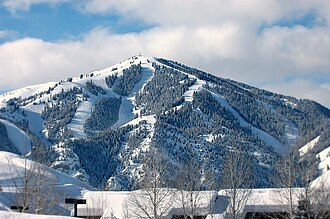
Sun Valley
City / town · 38 listings

Wallace
City / town · 37 listings

Twin Falls
City / town · 33 listings

Moscow
City / town · 36 listings

Coeur d'Alene
City / town · 22 listings

Driggs
City / town · 22 listings

Idaho Falls
City / town · 22 listings

Nampa
City / town · 14 listings

Soda Springs
City / town · 11 listings

Craters of the Moon National Monument
Park · 10 listings

Pocatello
City / town · 9 listings

Rocky Mountains
Region

Hagerman
City / town · 4 listings

Ashton
City / town · 19 listings

Kellogg
City / town · 10 listings

Lava Hot Springs
City / town · 9 listings

Southwestern Idaho
Region · 11 listings

Arco
City / town · 7 listings

Blackfoot
City / town · 4 listings

Salmon
City / town · 10 listings

Orofino
City / town · 7 listings

Lewiston
City / town · 12 listings

Rexburg
City / town · 8 listings

Post Falls
City / town · 7 listings

South Central Idaho
Region

City of Rocks National Reserve
Park · 1 listings

Custer Ghost Town
City / town · 1 listings

Northern Idaho
Region · 1 listings

Bonners Ferry
City / town · 4 listings

Payette-Fruitland
City / town · 4 listings
Burley
City / town · 6 listings

Stanley
City / town · 3 listings
Shoshone
City / town · 6 listings

Cottonwood
City / town · 5 listings

Eastern Idaho
Region

Southeastern Idaho
Region
Dubois
City / town · 2 listings
Mountain Home
City / town · 2 listings

North Central Idaho
Region · 2 listings

McCall
City / town · 2 listings

Central Idaho
Region · 1 listings
Island Park
City / town · 1 listings

Buhl
City / town

Shelley
City / town
Nearby

My experience
Write about your trip here. Notes save automatically in this browser as you type; back them up from My journal.