
Overview
Colorado is a state of wild contrasts. From the flat plains of the eastern portion of the state to some of the Rocky Mountains' highest peaks to the high desert and red rock country of the western reaches of the state, the landscape is incredibly varied, home to many diverse ecosystems and natural marvels, and supports a thriving hunting and outdoors culture that draws people from around the world.
And yet, the contrasts in the natural landscape are nothing compared to the political and social contrasts you will find here. Like much of the rest of the American West, Colorado is a traditionally rural state with a frontier heritage and a very pro-business attitude. But here you will also find fiercely liberal communities in the college and resort towns that have been home to hippies and major countercultural figures. There's a wide range of outlooks and attitudes here in a state that lives up to its nickname — "Colorful Colorado".
40 sights · 1 things to do
Updated from Wikivoyage on 1 October 2026 · Something wrong or missing? Improve it on Wikivoyage
Best things about Colorado
Black Canyon of the Gunnison National Park
Near Mosca. Spectacular 2250 ft deep canyon of the Gunnison River.
Great Sand Dunes National Park and Preserve
Near Montrose. Extensive sand dunes up to 750 ft tall at the foot of the Sangre de Cristo Range.
Mesa Verde National Park
Near Cortez and Mancos. UNESCO World Heritage Site protects nearly 600 Ancestral Pueblan cliff dwellings.
Rocky Mountain National Park
Between Estes Park and Grand Lake. Park protects 265807 acre of pristine mountains along the Continental Divide of the Americas.
Browns Canyon National Monument
Near Salida. This canyon of the upper Arkansas River is popular for kayaking and whitewater rafting.
Camp Hale-Continental Divide National Monument
Near Leadville. World War II mountain warfare training camp and facilities of the U.S. Army Tenth Mountain Division.
Plan your trip
Best time to visit & weather
Most comfortable: Jun–Aug. Summer highs reach about 79°F; winter lows dip to about 5°F. Cold months (Jan, Dec) can bring snow and ice; check road conditions. Wettest: Aug and Jul. (climate data from nearby Florissant Fossil Beds National Monument)
Blue bars: average daily high and low (°F). Purple columns: average monthly rain and melted snow (inches).
Getting there
- From you: to see whether to drive or fly, and how long it takes.
- COS City of Colorado Springs Municipal Airport, Colorado Springs — 45 mi away (major hub). Directions
- BJC Rocky Mountain Metropolitan Airport, Denver — 66 mi away. Directions
Many major airlines fly into Denver International Airport (DEN), one of the ten busiest airports in the world.
Full “Get in” guide ↓Sample 3-day trip
- Day 1: Northwestern Colorado — Colorado National Monument, Dinosaur National Monument, Betty Ford Alpine Gardens.
- Day 2: Southwestern Colorado — Black Canyon of the Gunnison National Park, Canyons of the Ancients National Monument, Curecanti National Recreation Area.
- Day 3: Denver Area — explore the town.
Built from the best-covered destinations in this region; open each for its own day plan.
Food for you
Colorado is filled with a large variety of restaurants with different cuisines. You can find almost everything you would ever want to eat or drink. But what, exactly, is Colorado cuisine? There are several indigenous foods worth trying, sought out for their associations with this Rocky Mountain state.
First, there is the cliché Denver omelette or Western omelette, an egg dish prepared with cheddar cheese, diced ham, onions, and green bell peppers. It probably originated on Western cattle drives, cooked up by cowboys, and most likely was not invented by a French gastronome as a "dénuer omelette," or a tasteless American omelette deprived of all class. Contrary to popular belief, you can get a Denver Omelette in Denver, but it will simply be one egg item out of many on the menu. This omelette doesn't inspire the hometown pride of, say, a Philly cheesesteak in Philadelphia. Also, there is the duffy roll, something like a cross between a cinnamon roll and a croissant.
What to ask about, for your diet
Diet labels come from each listing's description and cuisine; “likely” means the cuisine usually has good choices, not a promise. Check with the restaurant. Open the food finder
Photos


Places in Colorado
Map
Every listing with a location. Tap a pin for its Google Maps link.
Understand
History
Composer Igor Stravinsky once rode a ski lift in Aspen in the summertime, while Prospector Alferd Packer dined on human flesh near Lake City. Inventor Nikola Tesla created artificial lightning hundreds of feet long in Colorado Springs, and Writer Oscar Wilde attended a fancy dinner party at the bottom of a Leadville silver mine. Outlaw Butch Cassidy robbed the bank in Telluride, while Lawman Doc Holliday and Showman Buffalo Bill were buried in Glenwood Springs and Denver, respectively. All are part of the quirky and sometimes colorful history of Colorado.
Around 15,000 years ago, Native Americans migrated to Colorado, a nomadic group of hunter-gatherers distributed on the plains as well as the western plateaus. The first agricultural communities appeared on the Eastern Plains approximately 5,000 years ago. Circa 600 AD, the Ancient Pueblo Peoples began building elaborate communities in Southwestern Colorado in the Mesa Verde area. Other Native American groups, including the Arapaho, Apache, Cheyenne, Comanche, Kiowa, Shoshone and Utes have called Colorado home.
The Spanish were the first Europeans in the area. In 1541, Coronado led an expedition north through Colorado from Mexico in search of the fabled Seven Cities of Cibola, where the streets were supposed to be paved with gold. In 1803, French Emperor Napoleon Bonaparte sold the United States a vast tract of land known as the "Louisiana Purchase," an area which included Colorado. Lieutenant Zebulon Pike explored the recently purchased territory at President Thomas Jefferson's behest. Pike and his men were the first European Americans to find the 14,000-ft (4,268-m) peak near Colorado Springs, which today bears his name.
From the 1820s through the 1840s, Colorado became part of the Wild West, as fur trappers and mountain men began harvesting highly valued beaver and buffalo pelts for the Eastern U.S. and Europe. Trading posts were established for barter with the Native Americans, while trade routes sprang up between the United States and Mexico.
In 1858, gold was discovered at the mouth of Dry Creek in the present-day Denver suburb of Englewood, triggering the "Pike's Peak or Bust" gold rush of 1858-59. Approximately 50,000 people immigrated to Colorado in search of gold, creating the first large scale permanent settlements. Hard rock silver and gold mining towns were established throughout the territory.
A new town named Denver City was founded in honor of James W. Denver, governor of Kansas Territory.
In 1876, Colorado was admitted as the 38th state in the union. Colorado was called the "Centennial State" in honor of the one-hundredth anniversary of the U.S. Declaration of Independence.
In 1912, Hot Sulphur Springs hosted a ski jumping tournament and invited the Denver press. From this humble beginning, Colorado's ski industry was born. A handful of early ski runs were built around the state over the next 20 years, with the Highland-Bavarian Corporation beginning a rudimentary development of Aspen. World War II and the arrival of the 10th Mountain Division to train near Minturn ushered in the mid-20th century explosion of Colorado ski resorts. Trained for high alpine combat in Italy, the alumni of the 10th Mountain Division returned to the U.S. after the war to build Aspen, Vail and Arapahoe Basin.
By the 1960s, Colorado was a popular global destination for alpine skiing, with travelers drawn to the state's sunny days and champagne snow.
Geography
Colorado is split down the middle north to south by the Rocky Mountains. To the east is a region of high prairie, dry and wide open. To the west are rugged mountains arranged in various groups or ranges. (The largest single range in the state, the San Juan Mountains of the southwestern quarter, aren't actually part of the Rockies.) Meandering through the mountains is an imaginary line called the Continental Divide. This marks the flow of precipitation. Rain falling on the west of the Divide makes its way to the Pacific Ocean. Rain on the east makes its way to the Gulf of Mexico and the Atlantic Ocean. What may be surprising to visitors, however, is that, despite stereotypes, comparatively little of the state is actually mountainous. Perhaps a third of it is covered by hills or mountains, and even less is actually home to the soaring, jagged peaks for which the state is known.
Colorado has 54 mountain peaks above 14,000 ft (4,267 m) of elevation. The highest peak, Mount Elbert, rises to 14,440 ft (4,401 m) above sea level making it the highest peak in the North American Rockies. Tourism is a major industry, with skiing, snowboarding, hiking, camping, hunting, mountaineering and fishing as large sources of income for the state economy.
Colorado's population was about 5.6 million in 2017, a 30% increase from 2000. The state's population is growing, particularly in the large towns along the Front Range where the prairie and mountains meet. These towns include the capital, Denver, and Colorado Springs, Boulder, Longmont, Loveland and Fort Collins. Many of the residents of Colorado migrated from other states so being a "Colorado Native" is a point of pride with many people.
Climate
Those who've never been to Colorado might imagine a frigid, snowy state. However, Denver's 300 sunny days a year and overall mild temperatures are a point of pride among Coloradoans. Due to the Rocky Mountains which split the state in half, climate differs greatly from east to west, low to high. The weather changes rapidly and unpredictably, so be prepared for anything if you're traveling in most seasons. Colorado is also an exceptionally dry state, and has suffered through droughts in 2012-14 and 2018-19. Drink lots of water and watch for dehydration.
Winter is generally cold, though the weather is drastically different depending on elevation. While the mountains are likely to experience frequent snow storms, guaranteeing lots of fresh powder for skiing, they become less and less frequent as one travels down on the Eastern slopes. Lower elevations to the east of the Rockies experience occasional snow storms and even huge blizzards, but low temperatures seldom last long, and the winter is frequently interrupted by warm days with temperatures in the 50s, 60s °F (10s °C), or even higher. Bring warm snow clothes, but also a light jacket. While March is the snowiest month of the year, the warm days of spring are more frequent in this month, and even in the mountains it is not unusual for temperatures to rise to the 60s °F (15 °C) or above, making for some very interesting skiing.
Spring is generally brief and mild. Snow is not uncommon as late as May, even in lower elevation cities, and some ski resorts stay open as late as July. However, except during snow, the temperatures are warm and pleasant. Be prepared for rapid changes: it's not unusual for there to be 80°F temperatures during the day and snow in the evening.
Summer is perhaps Colorado's most predictable season. While some ski resorts may stay open until July, don't be deceived: the temperatures are warm, even in the mountains. While days in the 80s and 90s °F (27–38 °C) are frequent, higher temperatures are not unheard of. Fortunately, Colorado's low humidity means that even the hottest days don't pack the punch of heat in more humid regions. Summer does arrive later in the mountains, and some peaks have snow all year round. Still, even at the higher elevation, summer days tend to be warm, though nights are cooler. Afternoon thunderstorms are frequent starting in mid-July and continuing until about mid-September. Though very heavy, these are usually brief, lasting from as short as half an hour to two or three hours. Though they are a great relief from the dry days of earlier summer, lighting is dangerous and a huge risk factor for forest fires. These afternoon thunderstorms are especially severe in the eastern plain region of Colorado, and tornadoes also occur during this time. South Eastern Colorado has very desert-like summers, including flora and fauna, and shares many similarities to nearby New Mexico.
Fall is another relatively short season in Colorado. While daytime temperatures tend to stay warm, nighttime temperatures begin to drop starting in late August. Aspens, the primary native deciduous tree, changes colors in mid September. The first snow usually arrives sometime in October at lower elevations, though even earlier snows are not unheard of, and fairly common in the mountains.
Tourist information
- Colorado tourism website
Regions
There is no universally agreed-upon breakdown of regions in Colorado. You'll often hear natives speak of a very simple structure comprised of the Eastern Slope (meaning everything east of the crest of the Rockies), or the Western Slope (everything west of the range crest), and anomalous Denver or the "valley". The breakdown below is a bit more complex, partly for reasons of style and partly because the simple east/west/Denver formulation lumps areas together that are really very disparate. It's also roughly what's used by the Colorado Department of Tourism. If you are confused by some of the boundaries, simply consult a map of Colorado counties, as many of the regions follow county lines.
Denver Area
The most populous part of the state, with the large metro capital-city of Denver and its many suburbs.
Eastern Plains
The sparsely populated and flat agricultural country of the eastern half of the state.
Front Range
Follows the northern part of the Colorado Rockies, including the college town of Boulder and such well-known attractions as Rocky Mountain National Park.
Northwestern Colorado
Spectacular canyon-and-mesa country reminiscent of neighboring Utah and Colorado's most popular ski resorts.
South Central Colorado
The high country of the southern Rockies, home to the towering Sangre de Cristo Range and San Juan Mountains with their many ski resorts, with the broad, pleasant San Luis Valley between them.
Southwestern Colorado
A region rich in scenery, Old West history and Native American culture, home to the ancient cliff dwellings of Mesa Verde, quiet, rugged mining ghost towns high in the mountains, and the sheer depths of the Black Canyon of the Gunnison.
Cities
- Boulder — Prominent research center at the foot of the Flatirons is home of the University of Colorado.
- Denver — Founded as a placer mining camp, the "Mile-High City" is the state capital and the most populous city within 560 mi.
- Colorado Springs — Colorado's second-most-populous city is a military, technical, and recreational complex at the foot of Pikes Peak.
- Durango — Historic frontier town with scenic narrow-gauge railroad to Silverton in the San Juan Mountains.
- Fort Collins — This technology and recreation center is the home of Colorado State University.
- Grand Junction — The most populous city of western Colorado is the gateway to Colorado National Monument and Colorado's Wine Country.
- Greeley — Site of a historic agricultural colony on the South Platte River and home of the University of Northern Colorado.
- Montrose — Historic frontier town is the gateway to Black Canyon of the Gunnison National Park.
- Pueblo — Historic city on the Arkansas River, once the border between the United States and Mexico.
Other destinations
- Aspen – Former gold mining camp turned international resort community.
- Colorado's Wine Country – Near Grand Junction. Viticultural area has some of the highest vineyards in the world.
- Crested Butte – Former coal ming town is now a mecca for skiing and mountain biking.
- Glenwood Springs – Historic town at the mouth of spectacular Glenwood Canyon has the world's largest hot spring pool and adventure park.
- Mount Blue Sky – Near Idaho Springs. The highest paved highway in North America ascends this 14271 ft Front Range mountain overlooking Denver.
- Mount Elbert – Near Leadville. This 4401.2 m summit is the highest point of the Rocky Mountains of the United States and Canada.
- Pikes Peak – Near Colorado Springs. Both a cog railway and a toll road ascend to the 4302.31 m summit of "America's Mountain".
- Steamboat Springs – Hot springs and western-style ski resort at the foot of the Park Range.
- Vail – Second largest ski resort in North America.
Get in
By air
Many major airlines fly into Denver International Airport (DEN), one of the ten busiest airports in the world.
Other airports serving Colorado include:
- Aspen, Aspen-Pitkin County Airport (Sardy Field) (ASE)
- Colorado Springs, City of Colorado Springs Municipal Airport (COS)
- Cortez, Cortez Municipal Airport (CEZ)
- Denver, Denver International Airport (DEN)
- Durango, Durango-La Plata County Airport (DRO)
- Eagle, Eagle County Regional Airport (EGE)
- Fort Collins / Loveland, Fort Collins-Loveland Municipal Airport (FNL)
- Grand Junction, Grand Junction Regional Airport (Walker Field) (GJT)
- Gunnison, Gunnison-Crested Butte Regional Airport (GUC)
- Hayden, Yampa Valley Airport (Yampa Valley Regional) (HDN)
- Montrose, Montrose Regional Airport (MTJ)
- Telluride, Telluride Regional Airport (TEX)
By rail
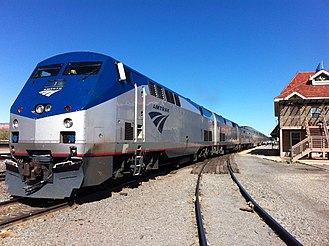
- The Amtrak California Zephyr runs from Emeryville to Chicago with stops in Grand Junction, Glenwood Springs, Granby, Fraser, Denver, and Fort Morgan.
- The Amtrak Southwest Chief runs from Los Angeles to Chicago with stops in Trinidad, La Junta, and Lamar.
- The Amtrak Winter Park Express runs seasonally between Denver and Winter Park
By highway
thumb|I-70 passes under the Continental Divide through the Eisenhower Tunnel.
- Colorado is served by five Interstate Highway routes and 18 U.S. Highway routes:
By bus
- Greyhound Lines provides service to Brush, Colorado Springs, Denver, Fort Collins, Fort Morgan, Frisco, Glenwood Springs, Greeley, Idaho Springs, Lamar, Loveland, Monument, Pueblo, Springfield, Trinidad, Vail, and Walsenburg.
By bicycle
The Adventure Cycling Association sponsors five long distance bicycle routes that pass through Colorado:
- The 4218 mi TransAmerica Trail
- The 3084 mi Great Divide Mountain Bike Route
- The 1619 mi Eastern Express Connector
- The 1577 mi Western Express Route
- The 695 mi Great Parks South Route
By foot
- The Continental Divide National Scenic Trail is a challenging hiking trail running approximately 3100 mi from Canada to Mexico. The trail follows the Continental Divide of the Americas along the crest of the Rocky Mountains and traverses five U.S. states: Montana, Idaho, Wyoming, Colorado, and New Mexico.
- The American Discovery Trail extends across the United States from Point Reyes, California, to Cape Henlopen, Delaware. The trail enters Colorado from Utah along the Colorado River and splits with the northern leg following the South Platte River into Nebraska and the southern leg following the Arkansas River into Kansas.
Get around
If you want to travel the state, then you will need to rent a vehicle. Prices are the same as across the United States.
The state is roughly quarted by two major Interstates, the north-south running I-25 and the east-west running I-70. (I-76 also enters the state in the Northeast from Nebraska). Surrounding the greater Denver area is a beltway consisting of the Northwest Parkway (tollway), C-470, E-470 (tollway)]. The Northwest Parkway is a 75-mile per hour toll road that seamlessly connects I-25 at E-470 in the north metro Denver area, with U.S. 36 and State highway 128 in Broomfield. Outside of the Front Range, the rest of the state is traversed by small highways and county roads.
The major cities of the greater Denver area (Denver, Aurora, Boulder, Lakewood, Littleton, Longmont, Broomfield) are linked by bus and train transportation using RTD. The cost is very reasonable and the busses run regular schedules.
Taxis and shuttle services are also available throughout the state.
By bus
Information on transit can be found from APTA.
CDOT runs a bus service called Bustang that offers intercity bus services across the state for very low fares.
See
Among many other attractions, Colorado is home to four national parks, nine national monuments, three national historic sites, two national recreation areas, four national historic trails, one national scenic trail, 11 national forests, two national grasslands, 44 national wildernesses, three national conservation areas, eight national wildlife refuges, three national heritage areas, 26 national historic landmarks, 16 national natural landmarks, more than 1,500 National Register of Historic Places, one wild and scenic river, 44 state parks, 307 state wildlife areas, 93 state natural areas, 28 national recreation trails, six regional trails, and numerous other scenic, historic, and recreational areas.
National parks
See Mesa Verde National Park
Near Cortez and Mancos. UNESCO World Heritage Site protects nearly 600 Ancestral Pueblan cliff dwellings.
See Rocky Mountain National Park
Between Estes Park and Grand Lake. Park protects 265807 acre of pristine mountains along the Continental Divide of the Americas.
National monuments
See Chimney Rock National Monument
Near Pagosa Springs. Ruins of an Ancestral Puebloan community of the Chaco Culture of 900-1100 CE.
See Colorado National Monument
Near Grand Junction. Rim Rock Drive and trail system through red sandstone pillars, arches and other strange rock formations that rise hundreds of feet above the Grand Valley.
National historic sites
File:Pioneer wagons Bent's Old Fort, outside La Junta in Otero County, Colorado LCCN2015632524.tif|thumb|220px|Bent's Old Fort National Historic Site near La Junta.
See Sand Creek Massacre National Historic Site
Near Eads. Another dark chapter in U.S. relations with Native Americans. In 1864, soldiers from the U.S. military attacked a peaceful encampment of Cheyenne and Arapaho along Big Sandy Creek, on the Eastern Plains. Out of a group of largely women, children and the elderly, 150 were killed.
National historic trails
See Old Spanish National Historic Trail
Winding through southwestern Colorado, this trade route first explored in 1776 leads from Santa Fe to Los Angeles.
See Santa Fe National Historic Trail
Through the southeastern Colorado. Trade route between Missouri and Santa Fe, New Mexico.
National scenic trails
See Continental Divide National Scenic Trail
Follows the Continental Divide of the Americas along the crest of the Rocky Mountains for 3100 mi from Canada to Mexico. Largely high alpine hiking in pristine wilderness areas. Trail never deviates more than 8 mi (13 km) from the Continental Divide.
National recreation areas
National forests
There are 11 national forests and 2 national grasslands in Colorado:
- Arapaho National Forest - The 14271 ft summit of Mount Blue Sky can be reached by the highest paved road in North America.
- Comanche National Grassland
- Grand Mesa National Forest
- Gunnison National Forest
- Pawnee National Grassland
- Pike National Forest - Near Colorado Springs. Home of 4302.31 m Pikes Peak, the most visited mountain in North America and the second most visited mountain in the world behind Japan's Mount Fuji. Drive to the top or ride the Pikes Peak Cog Railway.
- Rio Grande National Forest
- Roosevelt National Forest
- Routt National Forest
- San Isabel National Forest - The true high country in Colorado, with 19 of the state's "14ers," including 4401.2 m Mount Elbert, the highest summit of the Rocky Mountains of North America. Contains many famous mountain ranges: the Sawatch, Collegiate Peaks, Sangre de Cristo Mountains and Spanish Peaks.
- San Juan National Forest
- Uncompahgre National Forest
- White River National Forest - Home of the famous 14,163 ft Maroon Bells near Aspen. Also home to 14011 ft Mount of the Holy Cross near Vail.
State parks
Recreation and rugged natural beauty are the common denominators for Colorado's 44 state parks.
See Arkansas Headwaters Recreation Area
Near Buena Vista. Recognized as one of the nation's most popular locations for whitewater rafting and kayaking on the Arkansas River - the most commercially rafted river in the world.
City parks
Wilderness areas are hard to define in Colorado, with many of the state's most visited attractions administered by towns and cities. There are many places of cultural and historical significance, as well.
- Denver City Park - Designed in 1882, this graceful urban playground houses both the Denver Zoo and the Museum of Nature & Science.
- John Denver Sanctuary - In Aspen. Fan pilgrimage site and monument to the folk artist who gave so many a "Rocky Mountain High."
See Red Rocks Amphitheater
Located in Morrison on the western edge of Denver, an outdoor concert venue with amazing natural beauty that provides a great view of Denver below. Visit the Rock and Roll Museum at the top of Red Rocks, eat in the restaurant, hike the red sandstone and scrub oak trails for their scenic beauty and wildlife.
Popular attractions
See Air Force Academy Chapel
In Colorado Springs. Built in 1962, this white spired building is considered a premier example of Modernist architecture. Designated a National Historic Landmark.
See Crow Canyon Archaeological Center
Go on a real archeological dig of Pueblo peoples who lived near Mesa Verde National Park.
See Georgetown Loop Railroad
Considered an engineering feat for narrow gauge rail lines. Historic steam engine, open and closed cars, offering some fantastic views and a ride over a 100-foot-high trestle. A mine tour is also an option. Close to Denver with stations in Georgetown and Silver Plume.
See Glenwood Springs Hot Springs Pool & Spa
One of the largest hot springs pool in the world. For more Colorado geothermal pools, see the Wikivoyage article, hot springs.
See History Colorado Center
In downtown Denver. The History Colorado Center is a popular first stop for tourists to get acquainted with the state. Exhibits feature hands-on, interactive activities for families, like a ski jump simulator and storytelling "time machines" to push around a huge state map, combining artifacts with technology to highlight both fun and serious stories from Colorado's past.
See Kit Carson County Carousel
In Burlington near the Kansas border. After being buried for decades inside its terminal in feed corn, this 100 year old carousel is still in working order and with its original paint.
Scenic Drives
- Pike's Peak - Beautiful drive to the summit of Pike's Peak.
- Independence Pass -Highest paved pass in Colorado, Highway 82 near Aspen. Summit reaches 12,000 ft. Very scenic drive, road becomes one lane at points. Closed November (Thanksgiving) through May (Memorial Day).
- Million Dollar Highway - Incredible scenery between Ouray and Silverton first opened by Otto Mears in late 1800s. Road is opened year round.
Do
Snowmobiling
- Colorado is home to some of the best snowmobiling in the country. Glenwood Springs is surrounded by two areas, White River National Forest and the Grand Mesa. Trail riding on groomed trails, hill climbing, deep powder carving, scenic views, with a mixture of trees and meadows. These areas get an average of 35 feet of snow a year.
Fishing
With 6,000 miles of streams and more than 2,000 lakes and reservoirs to choose from, you can fish for over 35 species of both warm- and cold-water fish. Outdoor enthusiasts can enjoy angling, high mountain stream fishing and ice fishing in Colorado. Don't forget to watch the seasons set by the state and obtain your fishing license. Otherwise, you may be facing a stiff fine up to $50.
Gambling
- There is casino gambling in the historic towns of Black Hawk, Central City, Cripple Creek, Ignacio, and Towaoc.
Hiking
- Colorado has a seemingly endless amount of hiking trails. Colorado hiking trails can lead you through various terrain, including deserts, mountains, canyons, and more.
Mountain climbing
- Colorado has 54 "Fourteeners", mountain summits that exceed 14000 ft elevation, Most can be climbed without ropes or technical experience. The rewards are breathtaking. The current standard among introductory guidebooks to routes on Fourteeners is Borneman and Lampert, A Climbing Guide to Colorado's Fourteeners. This book is updated frequently to reflect changes in access restrictions (several are on private land or have private holdings high on the mountain that interfere with some routes). Many people also find Gerry Roach's (the second person in the world to summit all of the Seven Summits) book, Colorado's Fourteeners: From Hikes to Climbs to be a comprehensive guidebook for hiking and climbing these Colorado giants. Colorado has more "14ers" than any other state in the USA. Be prepared for crowds on some of the more popular summits during the summer on weekends. Also be prepared for an outing, as conditions can and do change rapidly on Colorado's high mountains.
- There are also many "high Thirteeners" that are nearly as rewarding to climb as the Fourteeners, while typically far less crowded with would-be mountaineers. Some of the high Thirteeners are more technically difficult than any Fourteener and require rope and technical expertise.
Mountain biking
- Colorado is one of the best places in the world to go mountain biking. The choice of location will depend on the season. Crested Butte, Steamboat Springs, Winter Park, Salida, Leadville, Vail, and Summit County all offer world class mountain bike trails, but many are only ridable after the snow melts in June and before the snow returns in September or October. During the spring and the fall, conditions are perfect at Grand Junction and Fruita, which offer desert trails similar to the famous bike trails in Moab, Utah. The trails along the Front Range, near Denver, Boulder, Fort Collins, and Colorado Springs are also excellent and, since they are located at various elevations, offer riding almost year-round. Additionally, most ski resorts offer lift-served mountain biking; Keystone, Winter Park, and Sol Vista resorts are among the most notable.
Skiing and snowboarding
Colorado is one of the world's top destinations for alpine skiing, snowboarding, and other winter mountain sports. Home to 26 ski areas and resorts, Colorado offers the perfect location to take a family or solo or couples vacation to. From beginners to expert mountains, these resorts are open to anyone. Even for the non skiers, the resorts and ski towns offer shopping, spas, tubing and any multiple other fun attractions to enjoy. Many of these resorts are only 1-2 hours outside of Denver.
Whitewater rafting
- Skiing isn't the only reason thousands of people travel to Colorado each year. During the summer months, Colorado offers, perhaps, some of the best white water rafting in the country. The Arkansas River is one of the most rafted river in the country with over 50,000 rafters experiencing the pounding white water of "The Ark", as the locals call it. Many of the outfitters are less than 2 hours outside of Denver and offer a variety of trips for all ages and experience levels.
- Golden has a world-class kayak course that is free and open to mostly year round use. There are several kayak shops in Golden, and they also have demos and clinics on various dates.
- Many of the mountain towns along the Colorado and Arkansas Rivers offer whitewater rafting excursions. You can choose a half-day, full-day or overnight trip.
- Black Canyon of the Gunnison National Park offers outstanding whitewater rafting and Gold medal trout fishing on the Gunnison River.
Wildlife viewing
It's not hard to spot wildlife in Colorado. There is a diversity of wild animals maintained by the Colorado Parks and Wildlife. Elk, mule deer, moose, mountain goats, bighorn sheep, antelope, brown bears, mountain lions and a smattering of bobcats range the national parks, forests and state parks. Migratory birds such as hummingbirds and the sandhill cranes return each year to their summer habitat. Look for "Wildlife Viewing Area" signs along the highways and interstates. Or simply venture into any wilderness area. You will need binoculars, a camera, as well as good luck and patience.
- I-70 at Genesse Park - This western suburb of Denver in the foothills of the Rocky Mountains is home to the City of Denver's Buffalo herd. Pull off the Interstate and snap a few photos with the bison in the foreground and the snow capped Continental Divide in the distance.
- Mount Evans - Also off I-70 Near Idaho Springs. Drive the Mount Evans Scenic Byway & Wilderness, the highest paved road in the U.S. More often than not, you will see a herd of shaggy white mountain goats on the drive.
- I-70 through Georgetown - Just west of Denver. Around the Downieville Starbucks, start scanning the north side of the Interstate. A herd of bighorn sheep routinely grazes on the steep slopes, often venturing as close as the shoulder of the highway.
- Alamosa/Monte Vista/Baca National Wildlife Refuge Complex - Near Alamosa. Threatened bird is the largest crane in North America. Each October and March, 3,000 -5,000 cranes make a migratory stopover. In the spring the San Luis Valley celebrates the Monte Vista Crane Festival to honor this impressive bird.
- Gould - In the North Park area of the state near Wyoming, is the Moose Watching Capital of the state, while Colorado in general is home to the southernmost moose population in North America.
- Rocky Mountain National Park is a wonderful place to look for elk. Fall days are the best time of the year to enjoy watching elk. Herds can be spotted all through the park and the elk's bugling is an almost constant noise during some times of the year.
Festivals & events
- Cherry Creek Arts Festival Held every Independence Day weekend in the Cherry Creek section of Denver, this is an outdoor festival full of shopping and food.
- Colorado Labor Day Lift Off Held annually over labor day weekend in Colorado Springs. Hot air balloons and crew come from all over the country to participate. This event takes place in Memorial Park, off Pikes Peak Avenue between Hancock Avenue and Union Boulevard near the shores of Prospect Lake. Mass ascensions of dozens of balloons happen on Saturday, Sunday and Monday mornings with a Balloon Glo scheduled for Saturday and Sunday evenings dependent on weather conditions. As this park is at the foot of Pikes Peak, the photos are spectacular. Originally called the Colorado Balloon Classic, the event was begun in 1977 and has grown to be the largest and longest continuously running hot air balloon launch in the Rocky Mountain Region and in the State of Colorado. Admission is free and this is a family friendly event.
- Mesa Verde Country Indian Arts & Culture Festival. May is archaeology month in Colorado and there is no better place to celebrate than Mesa Verde Country, the archaeological center of America. Archaeology ties all of us to the heritage we proudly share with the Ancestral Pueblo people from the past and the Native Americans living here today.
- Old South Gaylord Street Festival Held every Memorial Day weekend, this festival started when several local stores held sidewalk sales at the same time. They decided to coordinate their efforts next year, and now decades later vendors from all over the state set up tents. Many of the goods on sale are handmade, and there is plenty of food, live music and fair-style attractions as well.
- Strawberry Days Every June, Glenwood Springs holds a festival and carnival with something for everyone of every age to enjoy. They serve free Strawberries and Ice Cream on Saturday of the event. This event goes back over a hundred years. It is the longest running festival west of the Mississippi River. The festival was started to celebrate the strawberry harvest and to gather with friends and family to celebrate the warm days of summer ahead.
- Taste of Colorado Every year in downtown over 40 restaurants set up booths near the state capitol in Denver's Civic Center Park to celebrate the weekend. Admission is free but tickets are needed for the carnival rides and other attractions.
Buy
Cannabis
Any visitor who's seen Denver's numerous marijuana dispensaries can see that Colorado has permissive laws regarding cannabis. As of 2017, it is legal for in-state residents and out-of-state visitors to purchase 28 grams of marijuana (1 ounce). Consumption is only legal within private residences with the owner's permission, but not in places open to the public, such as cafes, restaurants, nightclubs, etc. Marijuana is also not allowed at Denver Airport. Consumption is permitted in a manner similar to alcohol, with equivalent offenses prescribed for driving under the influence. Drug tourists should still exercise caution and discretion. Cannabis is still illegal under US federal law, and taking marijuana (or other drugs) across state lines is considered drug trafficking and will be treated very harshly by authorities in neighboring states.
Local art
Anyone who lives in Denver or has been to Denver can tell you that the art scene is quite vibrant. You can buy small paintings that cost $50-$200 from many local restaurants, but if you want to go all out, you can buy large and expensive paintings from various clubs, showcases, and even the Denver Art Museum itself. Be warned, outside of big cities or large towns, there will be very little professional quality artwork to buy.
Eat
Colorado is filled with a large variety of restaurants with different cuisines. You can find almost everything you would ever want to eat or drink. But what, exactly, is Colorado cuisine? There are several indigenous foods worth trying, sought out for their associations with this Rocky Mountain state.
First, there is the cliché Denver omelette or Western omelette, an egg dish prepared with cheddar cheese, diced ham, onions, and green bell peppers. It probably originated on Western cattle drives, cooked up by cowboys, and most likely was not invented by a French gastronome as a "dénuer omelette," or a tasteless American omelette deprived of all class. Contrary to popular belief, you can get a Denver Omelette in Denver, but it will simply be one egg item out of many on the menu. This omelette doesn't inspire the hometown pride of, say, a Philly cheesesteak in Philadelphia. Also, there is the duffy roll, something like a cross between a cinnamon roll and a croissant.
Along with Pasadena, California, and Louisville, Kentucky, Denver is one of three cities that claim to have invented that quintessential American food, the cheeseburger. Made with American cheese layered on top of a patty of ground beef, cooked on a griddle or grill, and placed on a bun with the usual sides of pickles, onions, lettuce, tomatoes, and condiments, the cheeseburger is a fast food classic. In 1935, Louis Ballast of the Humpty Dumpty Drive-In in Denver received a trademark on the term, "cheeseburger." So Denver was arguably not the first place of origin for the cheeseburger, but it's the official one.
Sometime during your stay, a giggling friend will attempt to get you to eat a plate of Rocky Mountain Oysters. When asked, even your waiter or waitress will be coy about giving a straight answer. Don't be fooled, however. There are no fresh water mollusks thriving at high altitude. These oysters are bull or sheep testicles, flour battered and pan fried.
Many chefs reference Colorado's pioneering past and work with fresh game. Quail, rabbit, elk, venison, moose and even rattlesnake are served, ranging from the kitchen tables of families that still hunt all the way to four star restaurants.
Three meats, however, have deep associations with Colorado: Buffalo, Colorado Rack of Lamb, and Fresh Water Trout.
More aptly described as "bison," buffaloes once roamed the Great Plains of the U.S. in the millions. Nearly hunted to extinction for their hides, buffalo have been making a quiet comeback on ranches as a heart-healthy alternative to other meats. It is lower in cholesterol than either chicken or beef. Buffalo is a red meat best served medium rare--cooked too long and it will toughen. A plethora of restaurants serve bison as steaks, hamburgers and jerky, and in pot roast, meat loaf, even tacos and spaghetti. If you have access to a grill during your stay, buy some ground bison at the supermarket and make your own buffalo burgers. (Just be sure to mix the meat with oatmeal and egg as a binding agent, since bison is so lean, it tends to fall apart).
One hundred years ago, Greek immigrants settled in Western Colorado, bringing with them a millennia-old sheep raising tradition. Many of these high mountain ranches have morphed into the state's ski resorts, but a handful remain. In summer time, young lambs are still grilled in open charcoal pits in the Greek fashion, while Colorado lamb is a much sought-after gourmet ingredient. Be sure to ask for all-natural lamb raised in Colorado with no growth stimulants or added hormones.
Hiding in pools in mountain streams are wild brown, speckled and rainbow trout. The rainbow is a fresh water cousin of the salmon. Catching these skittish fish in the outback of the Rockies is half the challenge, since they are extremely sensitive to vibrations and hide when something approaches the stream. But once caught, trout meat is very flavorful and clean, if prone to tiny, throat-sticking bones.
During the late summer months, be sure to try some of Colorado's best produce. Melons from Rocky Ford, sweet corn from Olathe, peaches from Palisade, cherries from Paonia and chili peppers from Anaheim will enhance any Colorado vacation.
Drink
Colorado and drinking are often linked. It dates back to the grizzled fur trapping, mountain man days of the 1840s, when some of the state's pioneers would hole up in Bent's Fort and drink themselves blind with earthen jugs of "trade whiskey' - a dubious combination of "red eye" whiskey, hot chili peppers, plug tobacco and gunpowder. (A gourmet recreation of the drink can still be sampled at The Fort Restaurant, in Morrison, Colorado).
Colorado is only behind Vermont, Oregon and Montana in microbreweries per capita and considers itself the beer capital of the United States. (Denver is sometimes referred to as the, "Napa Valley of Microbreweries"). The magazine "Modern Drunkard" is headquartered in Denver. Brewpubs are open in almost every town.
One of the most popular adult tourist activities in Colorado is the Brewery Tour circuit. From the megabrewer Coors in Golden, to the refined tastes of New Belgium Brewing in Fort Collins, the Front Range of Colorado offers many opportunities to see beer being made.
Denver also hosts the Great American Beer Festival every Fall. This three day bacchanal celebrates micro, medium and mega brews from across the country with awards handed out to the judges picks for best brews.
There are also less celebrated, but equally worthy, meaderies and vineyards throughout the state. Colorado's nascent wine industry has exploded in the last 20 years. While there are now over 70 wineries in Colorado, ranging from the mountains to the plains, the communities of Grand Junction and Palisade on the Western Slope rightly label themselves as, Colorado's Wine Country. The high desert farming town of Palisade witnessed the birth of the state's modern vineyards in the '70s and early '80s. Even today, a majority of the state's wine grapes are grown in this tiny Victorian town in the federally-designated Grand Valley American Viticultural Area. (AVA). Palisade also hosts the Colorado Mountain Winefest every September at harvest time.
The earliest history of wine in Colorado, however, dates back to the nineteenth century. The first recorded wine production in Colorado was 1899. It was Colorado Governor George A. Crawford, the founder of Grand Junction in 1881, who first saw the Grand Valley’s potential for grape production. Crawford planted 60 acres of wine grapes and other fruit on Rapid Creek above Palisade.
Unfortunately, these early forays into viticulture ended with Prohibition in 1916. The General Assembly of Colorado enacted a statute and Colorado went "dry" four years before the passage of the 18th Amendment, which created national prohibition. Commercial winemaking ceased in Colorado and Palisade's grape vines were ripped out of the ground by authorities. It took over 70 years for the state's wine industry to reestablish itself.
Newer to the scene are Colorado's hard liquor and spirits distillers. A handful of artisan distillers such as Stranahan's in Denver and Peach Street Distillers in Palisade are creating bourbon, whiskey, gin and other flavored hard grained alcoholic beverages in limited batches.
One note of caution - some people find that their alcohol tolerance is lower at higher altitudes. Drink slowly until you acclimate.
Stay safe
Crime
Colorado usually sits in the top-tier of the safest states when it comes to crime, and most towns and suburbs are very safe. However, the state is not immune to gun violence and assaults. Denver, for example, is safe, but has seen an uptick in insecurity. Some places like Aurora and Colorado Springs have made headlines because of mass shootings.
Outdoors
Dehydration is a serious concern. The aridity of the air is deceptive--you will perspire and exhale moisture from your mouth and nose without even realizing it. If you're going to hike anywhere in Colorado, take plenty of water (at least one gallon per person, per day), decent nonslip boots or sneakers, as well as layers of clothing. Always hike with a waterproof jacket--more people die of hypothermia in Colorado in the summer simply by being caught unaware. Let people know where you are going and when you expect to get back.
The snowy portions of Colorado suffer avalanches from time to time. To avoid being crushed by an avalanche, check forecasts before heading into the snow, stay on marked trails and ski runs, avoid steep slopes, travel with a partner, and carry safety gear.
Be careful and watch for lightning while hiking, especially in the high country. It's often best to hike in the early morning to avoid the possibility of hitting an afternoon thunderstorm.
Very occasionally, mountain lions will attack. It is best to hike when the sun is up to avoid those attacks.
Tornadoes
The eastern plains region of Colorado is in tornado alley.
Tornadoes and severe thunderstorms with high winds and hail are not uncommon during the spring and summer months. Make sure you keep a radio on in the car. Should you hear the tornado sirens sounding, locate a suitable tornado shelter at once--do not stay outdoors to get a picture! Also, do not try to outrun the tornado in your car! You may wind up driving directly into the tornado's path.
Should the skies be cloudy, and the light take on a greenish-yellow cast, this is an indication of an imminent hail storm--again, seek shelter at once.
Keep in mind, these storms are spread over a wide area and many residents have never seen a tornado; however, Colorado residents do not hesitate to run to the basement/cellar if a tornado warning is announced. Refer to the Tornado safety article for analysis of the issues here.
Rattlesnakes
Of the 25 species of snakes in Colorado, only two are venomous: the western rattlesnake, which lives almost everywhere, and the massasauga, which is limited to the grassy lands of the Eastern Plains. If you are afraid of snakes, head for the cool, highest elevations of the Rockies. Western rattlers can't live above 7,500 to 9,500 ft (2134 to 2743 m).
Rattlesnakes are more afraid of you than you are of them. If you hear a rattle, it's a warning. Freeze and look around for the snake. Move cautiously away from the snake once you locate it, even if it means cutting your hike short.
Do not try to kill or further antagonize the snake, as this may lead to additional bites.
If you are bitten, the good news is that you almost certainly will live through the painful experience. Remain as calm as possible. Rattlesnake venom is essentially digestive enzymes, and will break down tissue around the bite. Try not to move much (which spreads the venom) unless you must do so. Painful swelling of lymph nodes in the groin or armpit usually occurs within one hour if the bite is on the leg or arm. Call emergency medical services (911) and/or a poison control center. There is antivenin available for use against all native pit vipers in the US.
Go next
Colorado is bordered by seven other states, and is a great launching pad for any tour of the "Old West." Many domestic and international tourists use Denver as a gateway city for their Western visits.
- Wyoming - Located to the north of Colorado, Wyoming is home to most of the landmass of Yellowstone National Park and provides an excellent opportunity to experience America's cowboy heritage.
- Nebraska - The state's northeastern neighbor has a rich agricultural heritage, offering visitors a glimpse into America's heartland.
- Kansas - Located to the east of Colorado, Kansas is generally considered the center of the country, at least in geographical terms, and is nicknamed "the Heart of America."
- Oklahoma - Colorado's southeastern neighbor has been a state since only 1907 and retains some of the pioneer spirit from its early days as a frontier, along with a lot of Native American history and culture.
- New Mexico - Colorado's southern neighbor was a Spanish and then Mexican colony until the Mexican War of the 1840s, and retains a culture that is heavily influenced by its native and colonial past.
- Arizona - Home to the Grand Canyon, Arizona borders Colorado to the southwest.
- Utah - Colorado's western neighbor is worth visiting for the mind-blowing rock formations found in places like Arches National Park and Zion National Park, as well as the winter recreation opportunities found around Salt Lake City, host of the 2002 Winter Olympics.
Other nearby destinations include:
- Route 66 traversed four of the states that border Colorado.
- The Four Corners where Arizona, Colorado, New Mexico, and Utah meet. Visitors can twist their bodies so that they are in four states at once.
All 117 places in Colorado

Denver
City / town · 177 listings
Grand Junction
City / town · 66 listings

Wellington
City / town · 53 listings

Rocky Mountain National Park
Park · 26 listings

Mesa Verde National Park
Park · 25 listings

Four Corners
Park · 2 listings

Vail
City / town · 93 listings

Fort Collins
City / town · 88 listings

Colorado Springs
City / town · 60 listings

Boulder
City / town · 59 listings

Steamboat Springs
City / town · 96 listings

Aspen
City / town · 47 listings

Arvada
City / town · 49 listings

Durango
City / town · 38 listings

Estes Park
City / town · 47 listings

Breckenridge
City / town · 47 listings

Walsenburg
City / town · 30 listings

Paonia
City / town · 43 listings

Golden
City / town · 32 listings

Hotchkiss
City / town · 41 listings

Loveland
City / town · 35 listings

Cañon City
City / town · 25 listings

Delta
City / town · 28 listings

Montrose
City / town · 30 listings

Pueblo
City / town · 17 listings

Alamosa
City / town · 31 listings

Glenwood Springs
City / town · 26 listings

Southwestern Colorado
Region · 11 listings

Idaho Springs
City / town · 47 listings

Telluride
City / town · 17 listings

Winter Park
City / town · 17 listings

Pagosa Springs
City / town · 15 listings

Black Canyon of the Gunnison National Park
Park · 5 listings

Black Hawk
City / town · 13 listings

Palmer Lake
City / town · 18 listings

Palisade
City / town · 8 listings

Denver International Airport
Airport · 9 listings

Silverton
City / town · 11 listings
Centennial
City / town · 13 listings

Trinidad
City / town · 10 listings

Great Sand Dunes National Park
Park · 3 listings

Aurora
City / town · 30 listings

Northwestern Colorado
Region · 14 listings

Manitou Springs
City / town · 30 listings

Ouray
City / town · 22 listings

Lakewood
City / town · 27 listings

Dillon and Silverthorne
Place · 19 listings

Cripple Creek
City / town · 14 listings

Poncha Springs
City / town · 20 listings

Buena Vista
City / town · 10 listings

Comanche National Grasslands
Park · 9 listings
Greeley
City / town · 21 listings

Beaver Creek
City / town · 14 listings

Salida
City / town · 11 listings
Castle Rock
City / town · 16 listings

Frisco
City / town · 10 listings

Burlington
City / town · 12 listings

Gunnison
City / town · 12 listings
Redstone
City / town · 15 listings
Cortez
City / town · 14 listings

La Junta
City / town · 5 listings

Central City
City / town · 10 listings

Georgetown
City / town · 13 listings
Keystone
City / town · 13 listings

Leadville
City / town · 9 listings

Westminster
City / town · 12 listings
Longmont
City / town · 11 listings

Morrison
City / town · 8 listings

Woodland Park
City / town · 5 listings

Colorado National Monument
Park · 4 listings

Crested Butte
City / town · 7 listings

South Central Colorado
Region · 1 listings

Thornton
City / town · 7 listings
Creede
City / town · 9 listings

Crestone
City / town · 3 listings

Highlands Ranch
City / town · 6 listings

Evergreen
City / town · 8 listings

Florissant Fossil Beds National Monument
Park · 8 listings

Granby
City / town · 2 listings

Hovenweep National Monument
Park · 2 listings

Clifton
City / town · 4 listings

Fairplay
City / town · 1 listings
Limon
City / town · 7 listings

Fort Morgan
City / town · 4 listings

Eastern Plains
Region
Englewood
City / town · 6 listings

Front Range
Region
Fruita
City / town · 6 listings

Grand Lake
City / town
Greenwood Village
City / town · 6 listings
Littleton
City / town · 3 listings
Monument
City / town · 6 listings
Brighton
City / town · 3 listings
Cheyenne Wells
City / town · 5 listings

Denver Area
Region · 2 listings

Gould
City / town · 1 listings
Towaoc
City / town · 4 listings
Westcliffe
City / town · 4 listings
Wray
City / town · 4 listings
Poudre Park
City / town · 4 listings
Broomfield
City / town · 4 listings
Berthoud
City / town · 3 listings

Copper Mountain
City / town
Kit Carson
City / town · 3 listings
Nederland
City / town · 3 listings

Rifle
City / town · 3 listings
Strasburg
City / town · 3 listings

Lyons
City / town
Dolores
City / town · 2 listings
Eagle
City / town · 2 listings

Sterling
City / town · 2 listings
Lone Tree
City / town · 2 listings

Curecanti National Recreation Area
Park · 1 listings
Sunlight Mountain
City / town · 1 listings

Arapahoe Basin
City / town
Lamar
City / town
Mancos
City / town
Nearby
Florissant Fossil Beds National Monument
Park · 8 listings · 13 mi away
Woodland Park
City / town · 5 listings · 24 mi away
Cripple Creek
City / town · 14 listings · 25 mi away
Fairplay
City / town · 1 listings · 31 mi away
Palmer Lake
City / town · 18 listings · 32 mi away
Manitou Springs
City / town · 30 listings · 33 mi away
Monument
City / town · 6 listings · 34 mi away
Buena Vista
City / town · 10 listings · 36 mi away
My experience
Write about your trip here. Notes save automatically in this browser as you type; back them up from My journal.