
Overview
The state of New York is a state of superlatives. Of course everyone knows the Big Apple, New York City, and it's certainly a premier travel destination, but the state is so much more than just one famous metropolis. Go beyond the concrete canyons of Manhattan and you'll find a large state with a variety of attractions.
From the magnificent Niagara Falls to the farms and wineries of the Finger Lakes; from the untamed wilderness of the Adirondacks to the large and small cities scattered throughout the state — every corner of New York has something you can't find elsewhere.
Updated from Wikivoyage on 1 October 2026 · Something wrong or missing? Improve it on Wikivoyage
Plan your trip
Best time to visit & weather
Most comfortable: May–Oct. Summer highs reach about 84°F; winter lows dip to about 16°F. Cold months (Jan, Feb, Dec) can bring snow and ice; check road conditions. Wettest: Jul and Jun. (climate data from nearby Albany)
Blue bars: average daily high and low (°F). Purple columns: average monthly rain and melted snow (inches).
Getting there
- From you: to see whether to drive or fly, and how long it takes.
- SYR Syracuse Hancock International Airport, Syracuse — 56 mi away (major hub). Directions
- ALB Albany International Airport, Albany — 63 mi away (major hub). Directions
International travelers will almost certainly come in via one of New York City's airports; while the major upstate cities have airports that can accommodate international flights, they are now fairly rare. Domestically, travelers will usually be coming from hubs such as Chicago, Atlanta, Charlotte, Philadelphia, or Boston. Flights into the smaller airports will likely connect through the larger ones.
Full “Get in” guide ↓Sample 3-day trip
- Day 1: Niagara Frontier — explore the town.
- Day 2: Mid-Hudson and Catskills — New York-New Jersey Trail Conference, Follow Ichabod Crane's route, Rock-climb.
- Day 3: Capital District — explore the town.
Built from the best-covered destinations in this region; open each for its own day plan.
Food for you
New York's diversity is on full display when considering its cuisines. New York City, of course, as the point of arrival for so many immigrants, is home to some of the most authentic and most diverse ethnic cuisines in the country. Even upstate, though, in cities not known for their diversity, you can find plenty of variety.
American cuisine is ubiquitous, of course, except perhaps in areas of New York City like Chinatown and Little Italy. Italian food (much of it Americanized, admittedly) is also found throughout the state. Asian cuisines—mostly Chinese and Japanese, but with some Thai and Indian restaurants in the larger cities—are also common. Greek food is readily available, primarily at family restaurants that also serve plenty of American food and a smattering of Italian. As well, the North Country has some French-Canadian influence in its cuisine.
What to ask about, for your diet
Diet labels come from each listing's description and cuisine; “likely” means the cuisine usually has good choices, not a promise. Check with the restaurant. Open the food finder
Photos


Places in New York
Understand
Nicknamed the Empire State, New York was one of the original thirteen colonies that formed the United States. It has, since the beginning, been among the most populous and influential states.
History
Before European settlement, the area now known as New York was already home to a number of Native American tribes. The Iroquois Confederacy (or Haudenosaunee), comprising the Cayuga, Onondaga, Seneca, Mohawk, Oneida, and Tuscarora tribes, was a major early exercise in representative democracy that may have influenced the Founding Fathers of the United States in their own pursuit of constitutional government.
European settlement of New York began at New Amsterdam on Manhattan Island. From there, Dutch and then English settlers expanded northward along the Hudson River to present-day Albany, then west along the Mohawk River. Sites in this area of New York were pivotal in the Revolutionary War, especially at Saratoga north of Albany, and New York City served briefly as the nation's first capital.
White settlement further west was impeded by poor terrain and Indian territories until the early 19th century. That slowly increasing population turned into an explosion with the construction of the Erie Canal from Buffalo to Albany, completed in 1825. Cities like Rochester grew up almost overnight, able to ship their goods easily to points both east and west, and New York City at the mouth of the Hudson became the young country's busiest and most important harbor.
New York has long hosted a diverse, vibrant population. New York Harbor served as the point of entry for countless immigrants after the Civil War, leading to rich ethno-national communities in the city and throughout the state. New York's cities were also important stops on the Underground Railroad, and they later saw the Great Migration of Black people coming from the South in the early 20th century.
New York grew and thrived for decades, its cities serving as centers of industry, business, and culture for the entire nation. It held the title of most populous state in the country for over 150 years and has counted numerous important and influential figures among its native sons and daughters. Since the middle of the 20th century, New York's influence has waned somewhat as California, Texas, and Florida have swelled in population, but New York remains one of the dominant states in the nation.
Geography
There is no concise way to describe the geography of New York, except maybe to say it is "diverse".
The city of New York, a major Atlantic port, is of course at sea level. It serves as a small fulcrum connecting Long Island (to the east) and the rest of the state (to the north)—to reach one from the other, one must pass through New York City. North of the city lies the vast majority of the state, known as "Upstate New York". The land rises as one goes north, following the Hudson River upstream. The river cuts a gorge through these Appalachian highlands, forming a wide river valley. To the west of this valley, the Catskills rise—a "dissected plateau" to geologists, but just "mountains" to laymen. Beyond the Catskills, the terrain drops and levels, forming the rolling hills of the Southern Tier. The Lower Hudson River south of Bear Mountain Bridge is geologically a fjord, making it the only fjord in the eastern United States.
North of the Catskills is the Mohawk River valley, which runs from west to east into the Hudson. Further west, you will find the Finger Lakes region, a series of long skinny lakes formed when river valleys were blocked by debris from retreating glaciers. North of the Finger Lakes, between them and Lake Ontario, lie large swaths of lowlands, areas which were once underneath the surface of a much larger, pre-glacial Lake Ontario.
North of the Mohawk valley and east of Lake Ontario, you can find the vast mountain range of the Adirondacks, which gradually give way to the St. Lawrence River valley in the northernmost part of the state.
Climate
New York has four distinct seasons.
Upstate New York is well known for its brutal winters. Although temperatures don't get as low as they do in areas like Minnesota and North Dakota, thanks in part to the giant heat reservoir known as Lake Ontario, that same lake serves to generate plenty of lake-effect snow. That being said, it is not unheard of for temperatures to drop into the single digits or even below zero, especially in areas of the Adirondacks and North Country, away from the lake. The major upstate cities compete each year for the "coveted" Golden Snowball Award for most total inches of snow—one small measure of pride for a city digging itself out from piles of snow several feet deep.
Snow is especially heavy to the east of Lake Ontario. Clouds pick up moisture as they travel over the lake's longest dimension, then dump it all on Watertown as they are forced to rise by the Tug Hill Plateau.
New York City is downright tropical by comparison. With the Atlantic Ocean to the southeast, the Big Apple benefits from the warm Gulf Stream waters without having to deal with ocean-effect snow. Nevertheless, though New York City gets much less snow than places upstate, it is not uncommon in winter, especially January and February.
Spring in New York tends to start out cold and damp, especially in areas near Lake Ontario, as the lake's waters have by then been thoroughly chilled by winter. True springtime comes around May, segueing quickly into summer.
Summer features brilliant sun, with occasional heat waves. Humidity is often high but the months are punctuated by spells of lower humidity that bring everyone outside to enjoy the weather.
Leaves start to turn color in September; at their peak, New York's leaf scenery is among the best in the country. By late October, though, it's all over but the raking, and winter begins to set in, with snow often falling by Halloween.
People
New York City is one of the most culturally diverse cities in the world, being home to immigrants from all around the globe. Upstate New York, on the other hand, tends to be made up of a combination of white people, Black people and Latinos, with many of the more rural areas being overwhelmingly white. Although New York is generally considered a liberal state, people's political leanings vary significantly by area. While larger cities like New York City and college towns like Ithaca are relatively progressive, in rural upstate New York, people tend to be more conservative.
Although New York City is culturally an East Coast city, much of upstate New York, including the city of Buffalo, is Midwestern in character and part of the Rust Belt.
Tourist information
- New York State tourism website
Regions
Some people say that New York has two regions: New York City and "Upstate" — i.e., everywhere north of there. In fact, New York is a large state with a number of distinct travel regions.
Downstate New York
The area surrounding New York City, the largest city in the United States, and home to 800 languages and cultures. It also includes suburban Westchester County and Long Island with great beaches.
Mid-Hudson and Catskills
The wilderness of the Catskills and the bucolic colonial communities of the middle Hudson offer two different types of getaways popular with New Yorkers.
The Capital District
The state capital of Albany and its surrounding cities anchor the upper part of the Hudson Valley, one of the most educated and most rapidly growing areas of Upstate.
The Adirondacks
The Adirondack Mountains are the true wilderness of New York, protected by an enormous park that encompasses most of the upper third of the state. Only scattered small settlements and the occasional roadway break up the stunning vistas.
The North Country
The North Country is dominated by large open areas between widely spaced cities, with a culture that borrows from neighboring Canada. The St. Lawrence River and its Thousand Islands are a major destination in this region.
Central New York
With hills and rivers, cities and farms, hard work and recreation, Central New York is a microcosm of New York as a whole. Syracuse is the region's cultural and economic center.
The Finger Lakes
The Finger Lakes are 11 long, thin bodies of water that provide waterfront activities and sightseeing opportunities. Hundreds of wineries dot the region, and the city of Rochester is a center of industry and innovation.
The Niagara Frontier
The city of Buffalo and the world-famous Niagara Falls are the major destinations in the Niagara Frontier, but the eastern areas of the region also offer attractions focusing on history, agriculture, industry, and the local waterways.
The Southern Tier
Bordering Pennsylvania's Northern Tier, the Southern Tier is a largely rural area with a few medium-sized cities, but with several cultural and industrial attractions.
Cities
- Albany — the state capital, steeped in the history of the state
- Binghamton — the Carousel Capital of the World
- Buffalo — the largest city in upstate New York, home of the Buffalo Bills, the Buffalo Sabres... and the Buffalo wing
- Cooperstown — a historic town that features the National Baseball Hall of Fame and Museum
- Ithaca — a small town with an attitude and home to Cornell University and Ithaca College
- New York — possibly the most celebrated city in the world, with towering skyscrapers, extraordinary diversity, international corporations, and incomparable culture
- Rochester — an old industrial city with a rich history of innovation and progress; now home to numerous universities and the famous "garbage plate"
- Saratoga Springs — the "Spa City", famous for its horse races and also a worthy stop for its offbeat performing arts scene
- Syracuse — the "Salt City" is known for its industry, and is home to Syracuse University and the Great New York State Fair
Other destinations
- Adirondack High Peaks — the tallest mountains in the largest state park in the United States
- Catskills — largely rural, wild, and mountainous, the Catskills are a popular vacation destination
- Chautauqua Institution — more-or-less a summer camp for adults, founded in 1874
- Darien Lake — the roller coaster capital of New York
- Fire Island National Seashore — a barrier island in Long Island with great beaches
- Lake George — boating, lakeside activities, and a big amusement park
- Letchworth State Park — see the Genesee River gorge and its three large, scenic waterfalls
- Niagara Falls — a powerful and awe-inspiring set of waterfalls on the Canadian border, and the "honeymoon capital of the world"
- Thousand Islands — a scenic vacation spot for the rich and famous, right on the Canadian border
Get in
By plane
International travelers will almost certainly come in via one of New York City's airports; while the major upstate cities have airports that can accommodate international flights, they are now fairly rare. Domestically, travelers will usually be coming from hubs such as Chicago, Atlanta, Charlotte, Philadelphia, or Boston. Flights into the smaller airports will likely connect through the larger ones.
New York City - the Big Three
- John F. Kennedy International Airport (JFK), Jamaica (Queens), +1 718-244-4444.
- Newark Liberty International Airport (EWR), Newark, New Jersey, +1-800-397-4636 (EWR-INFO).
- LaGuardia Airport (LGA), Flushing (Queens), +1 718-533-3400.
Large upstate airports
- Buffalo Niagara International Airport (BUF), 4200 Genesee St. Cheektowaga, +1 716 630-6000.
- Frederick Douglass Greater Rochester International Airport (ROC), 1200 Brooks Ave. Rochester, +1 585 464-6000.
- Syracuse Hancock International Airport (SYR), Colonel Eileen Collins Blvd. Syracuse, +1 315 454-4330.
- Albany International Airport (ALB), 373 Albany Shaker Rd. Albany, +1 518 242-2200.
New York City metro area smaller airports
- Long Island MacArthur Airport (ISP), 100 Arrivals Ave. Ronkonkoma (Islip), +1-888-542-4776 (LI-AIRPORT).
- Westchester County Airport (HPN), 240 Airport Rd. White Plains, +1 914 939-8484.
- Stewart International Airport (SWF), 1 Express Dr. Newburgh, +1 845 567-2563.
Southern Tier regional airports
- Greater Binghamton Airport (BGM), 2534 Airport Rd. Box 16, Maine (New York), +1 607 763-4471.
- Ithaca Tompkins International Airport (ITH), 72 Brown Rd. Ithaca, +1 607 257-0456.
- Elmira-Corning Regional Airport (ELM), 276 Sing-Sing Rd. Horseheads, +1 607 795-0402.
Jamestown (JHW), Saranac Lake (SLK), Plattsburgh (PBG), and Niagara Falls (IAG) have very small airports with only a few scheduled flights each day. General aviation airports are scattered throughout the state.
By car
- From southern Ontario, Toronto, and points west (including Detroit): Take the QEW; it ends at the Peace Bridge (US$3/CA$3) and puts you on I-190 in Buffalo. You could also take the QEW to the 420 (for the Rainbow Bridge (US$2.50 Canada-bound only) to Niagara Falls) or the 405 (for the Lewiston-Queenston Bridge (US$3.25 Canada-bound only) to Lewiston). Both of these will connect up with I-190 as well. Visitors from the Detroit area sometimes cut across Southwestern Ontario (401-403-QEW) rather than going south around Lake Erie.
- From Ohio and Western Pennsylvania: I-90 becomes the New York State Thruway (see Get around for details) at the PA-NY border. I-86 splits off shortly before the border, allowing you to avoid tolls.
- From Pennsylvania and New Jersey: U.S. 219 heads north near Olean, headed for Buffalo. U.S. 15 connects with I-86 in Corning; you can continue north on NY 15 or I-390 to Rochester. I-81 connects with NY17 in Binghamton, headed for Syracuse. I-84 passes through the lower part of the state. I-95 is the major east coast route and passes through New York City.
- From New England: I-95 connects Boston to New York City through Connecticut; I-90 goes through Springfield, Massachusetts to Albany. Near the Canadian border, U.S. 2 bridges Lake Champlain between Vermont and New York.
- From Quebec: Autoroute 15 (Interstate 87) is your route south from Montreal and the Laurentians to Albany and New York City.
- From Eastern Ontario: Highway 401 follows the border in the Thousand Islands region; the (toll) Thousand Islands Bridge (401 exit 661) leads to I-81 (Watertown-Syracuse-Binghamton). International bridges at Prescott-Ogdensburg and Cornwall-Massena may be less busy than I-81 as they land on two-lane highway on the US side.
By boat
- From Vermont: A ferry joins Burlington to Plattsburgh. Multiple ferries cross Lake Champlain from Vermont to New York, including some in the Adirondacks region.
- From New Jersey: Multiple operators transport commuters directly into Manhattan, including NY Waterway/BillyBey (+1-800-533-3779 (53-FERRY)), Seastreak (+1-800-262-8743 (BOATRIDE)) and Liberty Park Water Taxi (+1 201-432-6321). There's even a New Jersey ferry specifically to visit the Statue of Liberty in New York.
- From Connecticut: Seastreak operates a limited sightseeing service
- From Eastern Ontario: A seasonal car ferry joins Wolfe Island ON in the Thousand Islands to Cape Vincent NY; many seasonal passenger tour boats call at Boldt Castle on Heart Island NY from both sides.
Many cruise ships call at New York's ports from far and wide. The last of the major ocean liners, Cunard's Queen Mary 2, continues to uphold the century-old traditions of the Titanic era with scheduled liner service from Southampton UK to New York City.
By train
There are many trains that go through New York, especially through Pennsylvania Station in New York City.
- Routes traveling to New York state:
- From New England:
- Acela is a high-speed train connecting Boston, Providence, and New Haven to New York City
- Northeast Regional is a train that also follows the same route but cheaper
- Lake Shore Limited goes from Boston to Albany and Buffalo
- Ethan Allen Express comes from Vermont to New York City via Albany
- Vermonter is a train from Vermont to New York City via Springfield and Hartford
- From other states in the Mid-Atlantic
- Acela is a high-speed train through New York City from Philadelphia, Baltimore and Washington, D.C.
- Northeast Regional is a train from Virginia that follows the same route as Acela but cheaper
- Keystone Express comes from Harrisburg to New York City
- Pennsylvanian goes from Pittsburgh to New York City
- From the Midwest
- Lake Shore Limited goes from Chicago through Cleveland, Buffalo, and Albany to New York City.
- Cardinal comes from Chicago via Cincinnati and Washington, D.C.
- From the South
- Carolinian goes from North Carolina through Virginia to New York City
- Palmetto, Silver Meteor and Silver Star go from Florida to New York City
- Crescent goes from New Orleans to New York City via Atlanta
- From Canada
- Adirondack goes from Montreal to New York City via Albany
- Maple Leaf goes from Toronto through Buffalo and Albany to New York City
Place Metro-North Railroad
Commuter rail services into the New York City area. The New Haven Line to New York City's Grand Central Terminal originates in New Haven, Connecticut. The Port Jervis Line to Port Jervis in Orange County and the Pascack Valley Line to Spring Valley in Rockland County connect with New York Penn Station via New Jersey. The Harlem and Hudson Lines to and from Grand Central are completely within New York State.
Get around
New York is a big state, but it's not so big that driving isn't feasible. Even the trip from Buffalo to New York City is only about seven hours—too long for a day trip, certainly, but a weekend trip is doable for the dedicated. An alternative is to take a small regional jet from one of the upstate cities into New York; more expensive, but the trip is only 45-90 minutes in the air. Amtrak also runs trains that connect the five major cities for an in-between solution. If you're headed someplace more out of the way, though, you'll probably need to drive.
By car
Major areas of the state are served by an adequate network of Interstate Highways, supplemented by state routes that run between all but the smallest villages. Expressways are mostly limited to Interstates with a few exceptions.
Expressway exits are still numbered sequentially in New York, a fact unremarkable to most New Englanders but potentially confusing for everyone else. If you're at Exit 2 and looking for Exit 28, you have a lot farther to go than just 26 miles.
Most gas stations in New York, like most of the rest of the country, are self-serve only. State fuel tax (incorporated in the posted price, as elsewhere in the U.S.) is charged only on that portion of the price above $2 a gallon.
New York State Thruway
The most important highway in New York is the New York State Thruway, which runs on I-90 from the Pennsylvania border in the west, northeast to Buffalo, then east past Rochester, through Syracuse, and to Albany. I-90 continues to Boston while the Thruway picks up I-87 south to New York City. The Thruway, a toll road for most of its length, is the primary route between the major upstate cities and is often used to get to and from New York.
The Thruway is now totally cashless and electronic for tolls; no more stopping at tollbooths when you enter or exit the highway. Travelers with E-ZPass will have their tolls taken automatically from that account, while those without will be billed by mail based on their vehicle registrations. The toll rate for passenger cars is about eight cents a mile (five cents a kilometer; $22.86 from Downtown Buffalo to Downtown Albany, for example). Prices increase for vehicles with more axles or hauling trailers. Vehicles with New York E-ZPass accounts pay a lower rate. Frequent visitors to New York will often get an E-ZPass from New York in order to get the in-state rate, even if they already have one from another state.
To allow travelers to avoid leaving the highway before they reach their destinations, the Thruway is dotted with large service plazas every 35–50 miles (55–80 km) or so. Each contains one to five restaurants and a 24-hour Applegreen convenience store. Burger King, Chick-fil-A, Panera Bread, Popeye's, Shake Shack, Starbucks, and Dunkin' are the most common vendors. (Keep in mind Chick-fil-A locations are closed on Sundays.) Some locations have Taste NY farm markets. Vending machines, ATMs, free wi-fi, and of course gas pumps are available as well. EV charging stations are being added. All prices are high, but such are the benefits of having a captive market.
Other major routes
If you want to avoid the tolls, or if your destination is far from the Thruway, you have other cross-state options. A cheaper but slightly slower route to New York City from the west is along I-86, the Southern Tier Expressway. State Route 17, which I-86 is supplanting, is being upgraded to Interstate standards; east of Binghamton you'll encounter a few at-grade intersections, but it's still a quick route, and it's toll-free.
State Route 5 goes through many of the communities served by the Thruway, but as a surface street that passes through busy downtown areas. Route 5 begins as a continuation of the similarly-numbered Pennsylvania state highway at the state line along Lake Erie and ends in downtown Albany near the state capitol. It remains relatively close to the Thruway for much of its route across the state.
The slowest but most "interesting" route across the state is U.S. Route 20, which runs concurrently with Route 5 in a couple of areas, most notably the northern Finger Lakes. As a route stretching coast-to-coast across the northern U.S., it covers much of the same ground as Interstate 90 does today. U.S. 20 is much older, though, traveling right through the middle of countless old villages that lie south of the Thruway, often further south than Route 5. It's a simple two-lane highway for most of its length in New York, but if you have the time and the patience, it can be more interesting than the long stretches of nothingness along the Thruway or the Southern Tier Expressway.
I-81 and I-87 are the major north-south routes. I-81 travels south from the Thousand Islands at the Canadian border through Syracuse and Binghamton into Pennsylvania. I-87 (known as the Northway north of Albany) connects Montreal in Quebec with Albany and New York City. I-88 travels diagonally northeast-southwest, providing a connection between Binghamton and Albany. The only significant east-west route across the top of the state is U.S. 11, which diverges from I-81 in Watertown and heads northeast, then east.
In Western New York, Rochester is connected to points south via I-390 to Corning. From Buffalo, travelers can head southwest along I-90 or south along U.S. Route 219, which has been partially upgraded to expressway. (Those heading southeast will take the Thruway to I-390.)
State routes
New York has a good network of state routes, supplemented by county routes in most counties. Most villages are at the intersection of two or more state routes, and signage is usually clear, making it relatively simple to find your way to a particular place. You can be fairly confident that numbered state and county routes will be well maintained (including plowed in the winter) and rarely too far from civilization. Some interesting itineraries can be devised just by following a particular route wherever it leads.
In general, one- and two-digit state routes will be primary routes, although plenty of exceptions exist; you shouldn't assume anything just from the number. Major cross-state routes include 3, 5, 7, 17, and 104.
Safety
Municipalities in New York are well prepared for winter weather, but it can get so severe at times that even their expert crews can't keep up. Pay attention to travel advisories; in New York, if they say stay off the roads, they really mean it! During less severe winter storms, drive slowly and carefully. Follow a snowplow (at a safe distance!) if you can, though watch out for ones dropping salt.
Cell phone service can be spotty in the northern part of the state; be aware that you may not be able to easily call for help on the highways in that region.
A few miscellaneous traffic laws:
- State law mandates that your headlights must be on if your windshield wipers are running.
- Drivers, front-seat passengers, and children sitting anywhere must wear seat belts with primary enforcement.
- You are not permitted to use hand-held cellular phones while driving; hands-free phones are permitted but use with extra caution.
- Turning right on red light is permitted after stop, except where signs indicate otherwise like "No turn on red". However, this rule is reversed in New York City.
- There is no turn on red arrow.
- Vehicles turning left must yield to oncoming traffic unless they have a green left-arrow.
- The state speed limit is 55 mph, unless otherwise posted, as is the case with rural expressways being 65. Speed limits on surface roads will generally be 30 within cities and villages, except on the outskirts where it might be 35-45; New York City's default speed limit is 25. School zones may have a limit of 15 to 45 mph during school hours, 7AM-6PM.
- New York has a 'safe and prudent' speed law, so in adverse weather conditions, you can be pulled over even if you are below the posted limit if you appear to be sliding or otherwise struggling to maintain control over your vehicle.
By train
Amtrak provides passenger rail service primarily among the "Big Five" cities. Anything outside of the Erie Canal/Mohawk River/Hudson River corridor, though, and you're probably out of luck.
The Lake Shore Limited from Chicago has stops in Buffalo, Rochester, Syracuse, Utica, Schenectady, and Albany; from there riders can switch trains to Boston or continue (with a stop in Croton-on-Hudson) to New York City's Penn Station. The Empire Service starts in Niagara Falls but follows the same route as the Lake Shore Limited once it gets to Buffalo, with some additional stops along the way. The Maple Leaf is identical to the Empire Service except that it continues across the Canadian border to Toronto.
The Adirondack line travels roughly along I-87 from New York City to Montreal. The Ethan Allen Express splits off from the Adirondack route to go to Vermont instead of Quebec.
New York City's commuter rail network also reaches some of the nearby smaller cities; the Metro North Railroad serves upstate New York as far as Wassaic and Poughkeepsie, while the Long Island Railroad serves the entire length of Long Island. NJ Transit also serves some routes between New York City and upstate New York via New Jersey.
By bus
Information on New York transit can be found here.
Go Coach USA Shortline
In addition to Megabus, Coach USA also operate the Shortline as a commuter bus from Rockland, Orange and Sullivan Counties, NY; Bergen County, NJ; and Pike County, PA to Midtown, Downtown, the Eastside, and Wallstreet in Manhattan and over longer distances from Monticello, Binghamton, Ithaca, Owego, Elmira, Corning, Alfred, etc.
By boat
Every year thousands of travellers take to the New York State Canal System to spend hours, days, or even weeks cruising the placid waters and visiting a variety of villages and cities along the way. By navigating up the Hudson River from New York City, it is possible to go all the way to the Great Lakes and beyond via these waterways. Side trips to the Finger Lakes in Western New York or to Lake Champlain and Vermont are possible. Small watercraft, including canoes and kayaks, are welcome on these canals.
The crown jewel of the canal system is the famous Erie Canal, celebrating its bicentennial in 2025. The Erie runs from Buffalo all the way to the Hudson River at Albany, but there are several smaller canals that connect the Erie to other waterways: the Cayuga-Seneca Canal to the Finger Lakes, the Oswego Canal to Lake Ontario, and the Champlain Canal to Lake Champlain. This extensive network means you can, in theory, see the six biggest cities in the state all without leaving your boat.
The canals are drained and unusable between November 16 and April 30 each winter... not that you'd want to be out on them anyway. The canals open at 7AM and close between 5PM and 10PM depending on season. Call toll-free +1-800-422-6254 (1-800-4CANAL4) for canal information and conditions.
There are locks and sometimes lift bridges throughout the system, and if you want to go through any of them, you'll need to purchase a permit. Two-day, ten-day, and all-season passes are available, and the price varies based on the length of your vessel. You can purchase permits ahead of time by mail, or in person at any Canal Corporation Sectional Office; many of these offices are next to locks or bridges, but not every lock or bridge has one. The canal web site has a list of offices, and forms for mailing. Permit fees as of 2017:
Cruises
Many small companies offer river, lake, or canal cruises lasting an hour or three, but they rarely make stops and usually just come back to their departure point.
For a multi-day cruise vacation, [American Cruise Lines](https://www.americancruiselines.com/cruises/great-lakes-cruises/great-lakes-and-thousand-islands-cruise) offers 9-day Lake Ontario cruises in the summer. After staying overnight in Syracuse, passengers board the ship in Oswego, then sail to the Thousand Islands, Ogdensburg, Rochester, the Welland Canal, and Buffalo.
See
The natural beauty of the state is diverse, from the incomparable Niagara Falls and the Grand Canyon of the East, Letchworth State Park, to the mountainous unspoiled terrain of the Catskills and the Adirondacks, to the tranquil Finger Lakes. Adirondack Park, in particular, is an incredible gem—it's the largest single park in the continental U.S. and where the art of American painting began.
Urban sightseeing is also an important part of New York tourism. The Statue of Liberty in New York Harbor is something every American should see at least once, and many a tourist has passed the time just gawking at every sight in Manhattan. Certainly the Big Apple has the lion's share of the state's museums and landmarks, but that's no reason for ignoring upstate. Buffalo, Rochester, Syracuse, and Albany are cultural centers as well, and smaller cities such as Troy, Kingston, Saratoga Springs and Hudson are also beautiful and unique.
Halls of Fame
It's safe to say no state has as many Halls of Fame as New York. The most popular is the National Baseball Hall of Fame and Museum in Cooperstown—any true baseball fan should visit at least once. There's also the National Museum of Racing and Hall of Fame (for thoroughbred horse racing) in Saratoga Springs, the National Distance Running Hall of Fame in Utica, the International Professional Wrestling Hall of Fame in Albany, and the International Boxing Hall of Fame in Canastota. New York even had the National Soccer Hall of Fame in Oneonta (near Cooperstown and Canastota in Central New York) until it moved to Dallas–Fort Worth.
But it's not just sports! The National Women's Hall of Fame is in Seneca Falls, and the National Toy Hall of Fame, Toy Industry Hall of Fame, and World Video Game Hall of Fame are housed at the Strong National Museum of Play in Rochester. You'll also find the American Theatre Hall of Fame in Manhattan's Theater District, and the National Museum of Dance and Hall of Fame in Saratoga Springs.
Historical attractions
Nearly every community in the state has a claim to some sort of historical fame, either through sites of important events or esteemed native sons and daughters. From the colonial era, through the War of 1812, the abolition of slavery, the women's rights movement, and the civil rights movement, New Yorkers have been at the forefront. New York's Path Through History program highlights historical attractions throughout the state.
Recreation
New York maintains the oldest, and one of the largest, state park systems in the United States. Niagara Falls State Park lays claim to being the oldest state park in the country, while the Adirondacks constitute the largest single state-protected area. A fact little known to nonresidents is that more than a third of all land in New York (36.7%) is state-owned—the highest percentage in the country. (Many western states have far higher percentages of public land, but most of that land is federally owned.)
Itineraries
- Erie Canal — New York's homegrown gem; try biking, hiking, or boating along America's first superhighway
- The Jazz Track — New York City is a major stop on this tour
- Touring Shaker country — starts in Colonie, near Albany
- Appalachian Trail — passes through the state, but only for 72 of its 2,100 miles (116 of its 3,400 kilometers)
- Underground Railroad travellers took various routes; Harriet Tubman's freedom train led from Philadelphia through New York State.
Do
As a true four-season state, New York's activity schedule varies widely throughout the year. Obviously, the busiest time of year is the summer—which can be glorious—but localities work hard to make sure there's plenty to keep residents and visitors occupied even in the depths of winter.
New York City is the cultural center of the country, never mind the state, with countless theaters and world-renowned sports teams. None of the upstate cities compares in profile or in prominence, but each of them has a selection of first-class attractions and amenities sufficient to support tourism, without the crowds and frenetic activity of their larger neighbor. And when it comes to recreation, the Big Apple can't hold a candle to upstate's natural landscapes.
The mountainous terrain of the Catskills and the Adirondacks is perfect for hiking and camping, while the numerous waterways of the state—including Lake Ontario, Lake Erie, the Erie Canal, and the Hudson River—all see regular boat traffic throughout the summer months. Hunting and fishing are also big business upstate.
New York will never be mistaken for Colorado or Vermont by winter sports enthusiasts, but the unique glacial terrain of Western New York and the mountainous Adirondacks provide for some pretty good skiing. One of the premier winter-sports destinations is sleepy little Lake Placid, which has twice hosted the Winter Olympics and is home to Herb Brooks Arena, site of the 1980 Miracle on Ice in which an amateur U.S. Olympic hockey team beat the state-sponsored Soviet team in a stunning upset and followed that up by winning the gold medal match. If you are in New York City, Hunter Mountain is a fairly popular ski resort within day trip distance.
Oenophiles can visit one of the top wine regions in the country in the Finger Lakes; the entire region is dotted with small towns and villages of historic character, with more than 100 wineries in between. The region produces perhaps the best Rieslings outside of Germany, and Finger Lakes ice wines are growing in popularity. Wine tours, which let you visit multiple wineries in a single trip, see huge crowds, and the region is also home to a small but growing group of craft breweries, distilleries, and even cideries. The state's second-largest wine-growing region, the Peconic in and near the forks in eastern Suffolk County, Long Island, also produces some very good wines.
New York's agriculture is also on display at the numerous county fairs held in late summer. The biggest of these by far is the Erie County Fair in Hamburg, south of Buffalo—it's the third-largest (and one of the oldest) county fair in the country and rivals even the Great New York State Fair (held just outside Syracuse) in popularity.
Sports
New Yorkers love all kinds of sports. Of course American football, baseball, and basketball attract most of the attention, as they do throughout the U.S., but soccer, ice hockey, and lacrosse are increasingly popular, especially among youths.
New York City is, naturally, the center of professional sports, and you'll find fans of the Big Apple's sports teams throughout the state—even though some of them actually play in New Jersey! Baseball's Yankees and Mets, basketball's Knicks and Nets, hockey's Rangers, and soccer's New York City FC all play in the city. The New York Islanders hockey team plays just outside the New York City limits in Long Island, and the Jets and Giants football teams and Red Bulls soccer team play just outside the city in north Jersey, as do the New Jersey Devils (hockey).
Upstate, the sports business is smaller and more local. Buffalo has two major teams in the Buffalo Bills (football) and Buffalo Sabres (hockey); both have large followings as far east as Syracuse.
Baseball is the biggest pro sport upstate. Buffalo, Rochester, and Syracuse all have AAA clubs sporting near-big-league talent with minor-league prices. Binghamton has a AA club, while Fishkill has a high-A team (as does Brooklyn in New York City).
Hockey is also big-time in the upstate cities. Rochester, Syracuse, and Utica all have teams in the American Hockey League, the second level of professional hockey, while Glens Falls has an ECHL team at the third level. New York is also a hotbed for amateur hockey, and no state has more varsity college hockey teams than New York. Eleven New York colleges and universities play Division I men's hockey, and nine play women's hockey; eighteen (nineteen in 2025) have D-III teams.
New York high schools and colleges produce many outstanding lacrosse players, through professional lacrosse has struggled to gain a lasting foothold. Rochester and Buffalo both have a box (indoor) lacrosse team in the National Lacrosse League, with the Buffalo Bandits in particular boasting perhaps the league's most enthusiastic fanbase.
Even more than lacrosse, soccer is very popular among the youth of New York, but that sport has also struggled for consistency in the pro game, at least upstate. New York City has two teams in Major League Soccer, though one of them plays in New Jersey (as does the city's National Women's Soccer League team).
Casinos
Although horse racing (and the associated gambling) has a long history in New York, and the New York State Lottery was one of the first in the country, casino gambling had previously been unavailable in the state. The state's first casino was Turning Stone, a facility on sovereign Oneida Nation territory that started as a bingo hall. But casino gambling didn't really take off until the state started to permit the repatriation of land to various Native American nations. This allowed the nations to acquire land at market prices and incorporate it into their sovereign territories. Since such sovereign land isn't subject to state laws prohibiting casino gambling, casinos started popping up, even in the middle of cities not otherwise part of Native American territory.
As horse racing's popularity declined, racetracks petitioned the state to allow other kinds of gambling in their facilities. Although reluctant to allow table gaming and slot machines, the state allowed racetracks to become "racinos" using video lottery and video poker terminals. And then in 2015, after a constitutional amendment to permit limited casino gambling, the state granted casino licenses to one existing and three proposed facilities around the state, and the state now has its first non-Indian casinos.
Today, the state has six Indian casinos, four non-Indian casinos (one with a racetrack), two racetracks with automated table games, and six racetracks with video gambling terminals.
Amusement parks
New York is dotted with amusement parks both large and small. Some started as old trolley parks on the lake or ocean shores. Others grew from tiny roadside amusements into giant all-day attractions. And still others were developed by huge corporations on virgin land.
Some of the most well known amusement parks in the state:
- Six Flags Darien Lake, Niagara Frontier
- Enchanted Forest Water Safari, Old Forge, Adirondacks
- Six Flags Great Escape, near Lake George, Adirondacks
- Legoland New York, Goshen, Mid-Hudson
- Playland, Rye, Downstate
- Luna Park, Coney Island, New York City
Buy
New York abounds in shopping opportunities. New York City, of course, has its world-renowned fashion and retail offerings in Midtown Manhattan. Elsewhere in the state, many of the same labels offer discounts at outlet malls like Woodbury Common, a popular day trip from New York City in Orange County, or further upstate at Waterloo or Niagara Falls. The city's suburbs have plenty of shopping malls, as do the Albany and Buffalo areas upstate. In the rural hideaways of the Catskills and Finger Lakes regions a traveler is likely to find idiosyncratic antique stores.
Sales tax
The state levies a 4% sales tax, which is almost always augmented by a county sales tax of approximately the same amount. Cities are also allowed to levy sales tax; New York City does although most do not. In Dutchess, Nassau, Orange, Putnam Rockland, Suffolk and Westchester counties, there is also an extra 0.375% to support the Metropolitan Transportation Authority, which provides commuter rail services here. As a practical matter this puts sales tax rates at anywhere between 7% in some counties north of Albany to 8.875% in New York City and Yonkers; rates are available from the state Department of Taxation and Finance here.
While sales tax rates vary considerably, what is subject to it remains consistent across the state. Food is generally tax-exempt when unprepared but taxed when it is, so a bagel you buy at the deli to take home and eat however you would like to will not be taxed but one you have them slice and put cream cheese on will be, for instance (unheated food and food sold for consumption off-premises is also mostly tax-exempt. For specifics as to what food is taxable and what is not in New York, see here. Clothing and footwear is subject to tax when the purchase is more than $110, an exemption put in place to deal with the fact that four of the six states which exempt clothing from sales tax border on New York (this just applies to the state's portion of the tax; counties have the option to do this and not all of them do).
In addition to being subject to sales tax, a five-cent deposit is also charged on containers of soda and bottled water. They can be returned in the same manner described for alcoholic-beverage containers above under "Drink". As in other states that charge this deposit, you do not have to have been the purchaser to claim the refunded deposit, making this an excellent way to make a small amount of money in a pinch as long as you don't mind getting your hands dirty.
Eat
New York's diversity is on full display when considering its cuisines. New York City, of course, as the point of arrival for so many immigrants, is home to some of the most authentic and most diverse ethnic cuisines in the country. Even upstate, though, in cities not known for their diversity, you can find plenty of variety.
American cuisine is ubiquitous, of course, except perhaps in areas of New York City like Chinatown and Little Italy. Italian food (much of it Americanized, admittedly) is also found throughout the state. Asian cuisines—mostly Chinese and Japanese, but with some Thai and Indian restaurants in the larger cities—are also common. Greek food is readily available, primarily at family restaurants that also serve plenty of American food and a smattering of Italian. As well, the North Country has some French-Canadian influence in its cuisine.
Notably, each of the upstate cities has its own unique home-grown dishes. Buffalo is famous for its chicken wings, of course, but also features "beef on weck". Rochester is home to "white hots" and the late-night favorite "garbage plates". Syracuse has salt potatoes, the Utica-Rome area has its "chicken riggies", "spiedies" originated in Binghamton, and Plattsburgh residents favor "Michigan" hot dogs. While perhaps not as famous as Philadelphia's cheese steaks, most of these local favorites are worth trying, if only to get a taste of the local "flavor". Hit up the Upstate Eats Trail for some guidance.
From the Finger Lakes region all the way up to the North Country, Amish and Mennonite communities contribute fresh vegetables, fruits, and baked goods that are often found at road-side farm stands or at farmers markets. And New York City is well-known for New York-style pizza, pastrami, bagels, pretzels, cheesecake, danishes and black & whites, among other local specialties.
Many visitors don't realize that New York still has a very large agriculture industry. The state is one of the top American producers of apples, grapes, milk, sweet corn, and maple syrup. To highlight New York-grown food and drink, the state has a Taste NY program that brings flavors from around the state to consumers, particularly visitors. There are Taste NY stores (or shelves) in several service areas along the Thruway, at airports all across the state, and at Grand Central Terminal in New York City. You can also find Taste NY stands at farmers' markets (including a large one thrice weekly at Union Square in Manhattan) and at no less than five minor league baseball stadiums.
Drink
New York is the third-biggest wine-producing state in the country, after California and Washington State. The Finger Lakes are the largest wine country in the state, and there is also a substantial wine industry in Peconic, which consists of the forks of Long Island and adjacent countryside on the eastern end of Suffolk County. The oldest wine-growing area is the Hudson Valley, which still has some wineries.
There are also quite a few brewers in the state, including Ommegang, a brewery in Cooperstown that produces an excellent Belgian-style ale, and Brooklyn Brewery, which produces a solid lager.
Whiskey is also produced in New York. Baiting Hollow on Long Island produces an excellent whiskey and Hudson's, in the Hudson Valley, produces excellent though pricey whiskey and rye.
As a major apple-growing state, New York also produces both unfermented and hard ciders, but probably the best place to get those is either fresh at an apple orchard or at a bar that concentrates on hard cider.
All alcoholic beverages are sold subject to sales and excise taxes. A five-cent deposit is also charged on every container in a single-serving size, except hard cider. The deposit can be refunded by returning the bottle or can to a supermarket, which will usually have machines for this purpose; there are also an increasing number of for-profit redemption centers.
Compared to some of its neighboring states, New York has fairly loose liquor laws.
- The drinking age is 21, the same as every other state. Minors may not sell alcohol in liquor stores nor loiter in them, even when accompanied by an adult.
- Beer and other beverages with a low alcohol content can be found in supermarkets, drugstores and convenience stores, along with (since 2010) some wines, while hard liquor and most wine can be sold only in liquor stores. Liquor stores, by law, are not allowed to sell beer. They are also not allowed to take returns, so all sales are final.
- New York also requires that all liquor stores must be owned by a single actual person who lives within a certain distance of the store, and that person may only hold one license. This effectively bans chain liquor stores.
- Liquor stores must be closed at least one day of the week. Most choose to do so on Sundays even though they are no longer required to be closed on that day.
- Unlike many other states, New York does not require that anyone pouring beer or ale into a growler at a brewery for their own consumption off-premises use a growler specific to that brewery. You can even fill growlers at certain convenience stores.
- State law stipulates that bars must close at 4AM, although individual counties and municipalities may set an earlier closing time; outside of New York City, Albany and Buffalo, bars tend to close much earlier. Alcohol cannot be sold before noon on Sundays in most counties, and all sales for off-premises consumption are banned between 3AM and 6AM.
- While New York does not allow counties to go dry, towns may do so, with varying degrees of flexibility (for example, West Almond in Cattaraugus County forbids liquor sales for off-premises consumption, while several other towns do not allow on-premises consumption). Most of the totally dry communities are in remote, lightly-populated rural areas of the state that travelers are unlikely to visit without a specific reason to do so.
- Driving while intoxicated is a criminal offense in New York state. The blood alcohol limit is 0.08, although you can be cited for driving while intoxicated at as low as 0.05 if you are blatantly impaired. Minors under 21 have a blood alcohol limit of 0.02. It is also illegal to drive with an open container of an alcoholic beverage in the vehicle regardless of who is consuming it.
- Hunting while intoxicated or ability impaired is also a violation of the law and can result in jail time.
Stay safe
- Dialing 9-1-1 on any phone, wireless or landline, is free and will connect you with local police, fire, and ambulance services in an emergency.
- In New York State it is illegal to use your cellular telephone while operating a motor vehicle or riding a bicycle, unless it is a hands-free phone. Violators should expect hefty fines, although enforcement varies widely across the state. Texting while driving is also prohibited; the state has outfitted all interstate highway rest areas with limited free Wi-Fi to give drivers an alternative.
- Deer are very common in New York and pose a threat to motorists, more so at night. Reduce your speed in suburban and rural neighborhoods at night to reduce the chance of an accident.
- Don't approach wild animals, especially if they are acting unusually friendly or confused. Rabies outbreaks in animals do occasionally occur. If bitten, especially by a racoon, bat, skunk, fox or dog, seek medical attention immediately.
- Upstate New York contains a few species of poisonous snakes, such as the copperhead, the eastern massasauga and the timber rattlesnake. Although it is uncommon to encounter these snakes, seek medical attention immediately if bitten.
- Also beware of the black widow spider, and seek medical attention if bitten.
- Possession of recreational cannabis is legal (for those over 21) in New York, up to 3 oz. outside the home. You can purchase it at licensed dispensaries (for off-premises consumption) or licensed consumption lounges. Legal marijuana is expensive, but it's legal—and much safer than black-market weed. Limit your consumption to consumption lounges, private homes, and public spaces that allow smoking; it's prohibited anywhere smoking is prohibited, as well as inside vehicles (parked or not). Whatever you do, do not bring it in from other states, or take it out of New York into other states. It's still illegal federally, and you can get into very deep trouble for interstate transportation of cannabis.
- Rifles and shotguns: In contrast to neighboring New Jersey, which has virtually zero-tolerance for firearms of any sort, New York (except for New York City) has a more welcoming policy as to travel with long guns (rifles and shotguns) except for so-called 'assault weapons.' Rifles and shotguns need to be unloaded and cased in a vehicle's trunk while under transport, and can be carried afield while hunting or target shooting. See the NYS Department of Environmental Conservation website for appropriate hunting licenses, which will add legitimacy to the possession of long guns, and make encounters with law enforcement a non-event. The same cannot be said of handguns.
- Handguns: Do not transport a handgun into New York State without a New York State handgun license. Handguns in New York are required to be registered and listed upon the individual's handgun license. No unregistered handguns are allowed in New York State (even by a license holder), and no individual can possess a handgun in New York State without a license. New York State does not recognize any out-of-state licenses. Air travelers who live in neighboring Vermont and utilize Albany International Airport as the nearest airport to home have been arrested upon check-in with the airline if they have a handgun in their checked luggage.
Respect
New York was the birthplace of the modern gay rights movement in the USA with the Stonewall Rebellion of 1969. New York and states in New England were among the early US states to legally recognize same-sex marriage. The majority of New Yorkers are socially tolerant and used to diversity, even in upstate areas that are perceived to be more conservative than New York City.
It is important to remember that New York City was one of the targets of the September 11 attacks in 2001, and the memory of 9/11 is still very fresh in the minds of New Yorkers, especially in New York City. Some may not wish to discuss the topic of 9/11, while others will gladly share their personal stories with you.
Go next
- Vermont — the fall foliage in New York's northeastern neighbor is a famously beautiful sight, and the state offers rural charm all year
- Massachusetts — the birthplace of America's revolution, this eastern neighbor of New York is home to historical towns, the vacation hotspot of Cape Cod, and the always-interesting city of Boston
- Connecticut — home to Yale University, Mystic Seaport, the restaurant and nightlife scene in downtown New Haven, the Maritime Aquarium, and two major Native American casinos
- New Jersey — the Garden State, south and west of southeastern New York, offers everything from the glitz of Atlantic City to the migratory birds of Cape May
- Pennsylvania — New York's southern neighbor saw the birth of the nation in Philadelphia and also offers rural charm
- Ontario — just across the Great Lakes and the St. Lawrence River, this Canadian province shares Niagara Falls and offers everything from the eclectic city of Toronto to the nature of Algonquin Provincial Park
- Quebec — New York's northern neighbor is Canada's French-speaking province, home to a unique culture and distinctly European feel
All 340 places in New York

West Side
Neighborhood · 270 listings

Rochester
City / town · 251 listings

Buffalo
City / town · 92 listings

North Buffalo
Neighborhood · 243 listings

East Side
Neighborhood · 230 listings

Downtown
Neighborhood · 221 listings

South Buffalo
Neighborhood · 181 listings

Allentown and the Delaware District
Neighborhood · 144 listings

Elmwood Village
Neighborhood · 151 listings

Childs
City / town · 4 listings
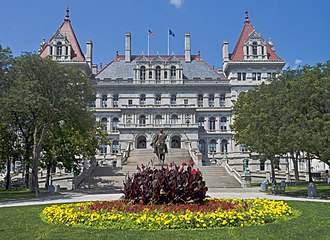
Albany
City / town · 103 listings

Clarence
City / town · 83 listings

Staten Island
City / town · 59 listings

New York City
City / town · 47 listings

Central Park
Neighborhood · 41 listings

East Village
Neighborhood · 47 listings

Chinatown
Neighborhood · 51 listings

Palmyra
City / town · 37 listings

Briarcliff Manor
City / town · 43 listings

Tarrytown
City / town · 34 listings

Manhattan
City / town · 6 listings

Letchworth State Park
Park · 20 listings

Upper West Side
Neighborhood · 96 listings

Theater District
Neighborhood · 83 listings

Syracuse
City / town · 89 listings

Binghamton
City / town · 82 listings

Ithaca
City / town · 78 listings

Financial District
Neighborhood · 67 listings

Bronx
City / town · 76 listings

Saratoga Springs
City / town · 79 listings

Chelsea
Neighborhood · 56 listings

Gramercy Flatiron
Neighborhood · 55 listings

Midtown East
Neighborhood · 44 listings

Niagara Falls
City / town · 50 listings

Upper East Side
Neighborhood · 42 listings

Utica
City / town · 52 listings

Harlem and Upper Manhattan
Neighborhood · 36 listings

Greenwich Village
Neighborhood · 36 listings

Williamsburg
Neighborhood · 52 listings

Westhampton Beach
City / town · 31 listings

Yonkers
City / town · 43 listings

Southwest Brooklyn
Neighborhood · 53 listings

Downtown
Neighborhood · 34 listings

Flushing-Northeast
Neighborhood · 40 listings

Plattsburgh
City / town · 36 listings

Saranac Lake
City / town · 46 listings

Olean
City / town · 47 listings

Oswego
City / town · 31 listings

Kerhonkson
City / town · 51 listings

Bedford-Stuyvesant and Flatbush
Neighborhood · 29 listings

Flower Hill
City / town · 23 listings

Troy
City / town · 37 listings

Long Island City and Astoria
Neighborhood · 34 listings

Coney Island and Brighton Beach
Neighborhood · 34 listings

Auburn
City / town · 30 listings

Mid-Hudson and Catskills
Region · 3 listings

Lake Placid
City / town · 41 listings

Montauk
City / town · 34 listings

Lake George
City / town · 38 listings

White Plains
City / town · 17 listings

SoHo
Neighborhood · 22 listings

Long Beach
City / town · 33 listings

Poughkeepsie
City / town · 24 listings

Shelter Island
City / town · 27 listings

Canandaigua
City / town · 19 listings

Ticonderoga
City / town · 19 listings

Riverhead
City / town · 21 listings

Seneca Falls
City / town · 20 listings

Ellenville
City / town · 31 listings

North Hempstead
City / town · 22 listings

Lower East Side
Neighborhood · 18 listings

Kingston
City / town · 17 listings

Sleepy Hollow
City / town · 23 listings

Stony Point
City / town · 17 listings

Cooperstown
City / town · 22 listings

Glen Cove
City / town · 16 listings

Port Jefferson
City / town · 15 listings

Henrietta
City / town · 18 listings

Hyde Park
City / town · 14 listings

Watertown
City / town · 23 listings

Clayton
City / town · 32 listings

Rome
City / town · 19 listings

Gowanus and Red Hook
Neighborhood · 15 listings

Rhinebeck
City / town · 15 listings

New Lebanon
City / town · 21 listings

East
Neighborhood · 20 listings

Fire Island
City / town · 20 listings

Old Forge
City / town · 26 listings

Ogdensburg
City / town · 17 listings

Catskills
Region · 1 listings
Ellicottville
City / town · 28 listings

Long Island
Region · 4 listings

Cazenovia
City / town · 13 listings

TriBeCa
Neighborhood · 12 listings

Huntington
City / town · 14 listings

Malone
City / town · 23 listings

Brooklyn
City / town · 4 listings

Cold Spring
City / town · 16 listings

Northport
City / town · 16 listings

Chappaqua
City / town · 12 listings

Irvington
City / town · 9 listings

Rockville Centre
City / town · 15 listings
Trumansburg
City / town · 24 listings

Westchester County
Region · 9 listings
Ossining
City / town · 23 listings
Jackson Heights
Neighborhood · 23 listings

Schenectady
City / town · 11 listings

Southold
City / town · 51 listings

Franklinville
City / town · 20 listings

Brookhaven
City / town · 16 listings

Fire Island National Seashore
Park · 13 listings

Jamaica
Neighborhood · 18 listings

Sackets Harbor
City / town · 15 listings
Clifton Park
City / town · 20 listings
Warwick
City / town · 20 listings

Batavia
City / town · 17 listings

Fairport
City / town · 10 listings

Stony Brook
City / town · 7 listings

Port Jervis
City / town · 13 listings

Potsdam
City / town · 15 listings

Croton-on-Hudson
City / town · 14 listings

Adirondacks
Region · 1 listings
Plainview
City / town · 16 listings

Cambridge
City / town · 4 listings

Brewster
City / town · 15 listings

Dobbs Ferry
City / town · 12 listings

Queens
City / town · 3 listings

Manhasset
City / town · 9 listings

Bethpage
City / town · 10 listings
Little Valley
City / town · 13 listings

Cattaraugus
City / town · 9 listings

East Rochester
City / town · 8 listings

Cortland
City / town · 10 listings

John F. Kennedy International Airport
Airport · 1 listings
Randolph
City / town · 10 listings

Southern Tier
Region
West Seneca
City / town · 7 listings
Salamanca
City / town · 6 listings

Prospect Park
Neighborhood · 30 listings

Dutchess County
Region

LaGuardia Airport
Airport · 35 listings

North Country
Region
Downstate New York
Region

Bay Shore
City / town · 30 listings

New Paltz
City / town · 21 listings

Pleasantville
City / town · 30 listings

Smithtown
City / town · 9 listings

Hudson
City / town · 17 listings

Wilmington
City / town · 26 listings

Victor
City / town · 11 listings

Marlborough
City / town · 31 listings

Amherst
City / town · 29 listings

Jamestown
City / town · 19 listings

New Rochelle
City / town · 22 listings

Cheektowaga
City / town · 27 listings

Sullivan County
Rural area · 9 listings

Allegany State Park
Park · 29 listings

Red Hook
City / town · 9 listings

Scarsdale
City / town · 4 listings

Sodus Point
City / town · 7 listings

Clinton
City / town · 12 listings

Islip
City / town · 21 listings

Tuckahoe
City / town · 21 listings

Orchard Park
City / town · 21 listings

Massena
City / town · 21 listings
Niagara Frontier
Region · 20 listings

Port Chester
City / town · 8 listings

Oyster Bay
City / town · 11 listings

Garden City
City / town · 13 listings

East Hampton
City / town · 8 listings

Roslyn
City / town · 17 listings

Corning
City / town · 7 listings

Skaneateles
City / town · 13 listings

Somers
City / town · 10 listings

Finger Lakes
Region

Mamaroneck
City / town · 9 listings

Rensselaer
City / town · 9 listings

Canton
City / town · 12 listings

Hempstead
Rural area · 9 listings

Cohoes
City / town · 8 listings

Nyack
City / town · 8 listings

Herkimer
City / town · 8 listings

Amenia
City / town · 7 listings

Purchase
City / town · 4 listings

East Aurora
City / town · 13 listings
Harrison
City / town · 15 listings

Highlands
City / town · 6 listings

Pelham
City / town · 6 listings

Forest Park
Neighborhood · 6 listings

Watkins Glen
City / town · 9 listings

Blue Mountain Lake
City / town · 6 listings
Babylon
City / town · 8 listings

Lockport
City / town · 14 listings
Merrick
City / town · 14 listings

Westport
City / town · 8 listings

Grand Island
City / town · 5 listings

Oneonta
City / town · 2 listings

North Tonawanda
City / town · 14 listings

Delaware County
Region · 2 listings

Champlain and Rouses Point
City / town · 8 listings

Tupper Lake
City / town · 11 listings

Port Washington
City / town · 5 listings

South Oyster Bay
City / town · 8 listings
Elizabethtown
City / town · 13 listings

Putnam County
Region · 13 listings

The Rockaways
Neighborhood · 4 listings

Hamburg
City / town · 10 listings

Chautauqua
City / town · 7 listings

Beacon
City / town · 3 listings

Kinderhook
City / town · 3 listings

Tonawanda
City / town · 12 listings
Little Falls
City / town · 12 listings

Alexandria Bay
City / town · 2 listings
Geneva
City / town · 11 listings

Hastings-on-Hudson
City / town · 5 listings

Larchmont
City / town · 5 listings

Nanuet
City / town · 5 listings

Newburgh
City / town · 8 listings

Rye Brook
City / town · 8 listings

Sag Harbor
City / town · 2 listings

Medina
City / town · 8 listings

Farmingdale
City / town · 5 listings

Crown Point
City / town · 4 listings

Lackawanna
City / town · 4 listings

Suffern
City / town · 1 listings

Southampton
City / town · 4 listings

Avon
City / town · 7 listings

Bronxville
City / town · 3 listings

Elmira
City / town · 6 listings

Geneseo
City / town · 3 listings

Monsey
City / town
Orleans County
Region

Piermont
City / town · 3 listings
Woodstock
City / town · 9 listings

Le Roy
City / town · 3 listings

Dansville
City / town · 3 listings

Lewiston
City / town · 9 listings

Capital District
Region · 3 listings

Bainbridge
City / town · 5 listings

Ballston Spa
City / town · 5 listings
Hammondsport
City / town · 8 listings

Katonah
City / town · 5 listings

Keene
City / town · 5 listings
Mount Sinai
City / town · 8 listings

New City
City / town · 2 listings

Peekskill
City / town · 5 listings
Sterling
City / town · 8 listings

Yorktown
City / town · 2 listings

Barker
City / town · 5 listings

Massapequa
City / town · 5 listings
Fishkill
City / town · 8 listings

The Plandomes
City / town · 5 listings

Amityville
City / town · 4 listings

Columbia County
Region · 7 listings

Farmington
City / town · 4 listings

Fredonia
City / town · 1 listings

Greene County
Region · 7 listings

Jay
City / town · 4 listings
Naples
City / town · 4 listings

Nassau County
Region · 4 listings

Penn Yan
City / town · 4 listings

Rye
City / town · 4 listings
Ulster County
Region · 4 listings
Spencerport
City / town · 7 listings

Pound Ridge
City / town · 1 listings

Youngstown
City / town · 4 listings

Alfred
City / town · 1 listings

Cuba
City / town · 7 listings

Darien Lake
Park

Mount Kisco
City / town · 3 listings

Mount Vernon
City / town · 3 listings

North Pole
City / town · 3 listings

Saugerties
City / town · 3 listings

Spring Valley
City / town · 3 listings

Tioga County
Rural area · 6 listings

Wyoming County
Rural area · 6 listings

Albion
City / town · 3 listings
Brockport
City / town · 6 listings
New Windsor
City / town · 6 listings
Chester
City / town · 5 listings

Valhalla
City / town · 2 listings

Sharon Springs
City / town · 2 listings
Lancaster
City / town · 5 listings
Bushnell's Basin
City / town · 5 listings

Central Valley-Harriman
City / town · 4 listings

Orange County
Region · 1 listings

Pulaski
City / town · 1 listings
Watervliet
City / town · 4 listings

Finger Lakes Apple Country
Region · 1 listings

Alden
City / town · 1 listings
Wolcott
City / town · 4 listings

Lowville
City / town · 1 listings
Bear Mountain State Park
Park · 4 listings
Avoca
City / town · 3 listings

Bayville
City / town
Eden
City / town · 3 listings

Erie County
Place

Genesee County
Region
Lewisboro
City / town · 3 listings
Newark
City / town · 3 listings

Niagara County
Region

Palisades
Park

Rochester and Suburbs
Region

Rockland County
Region

North Fork
Place
Windham
City / town · 3 listings

Western Finger Lakes
Region
Waterport
City / town · 3 listings

Middletown
City / town

Norwich
City / town · 3 listings
Cairo
City / town · 2 listings
Eastchester
City / town · 2 listings
Elmsford
City / town · 2 listings
Middleport
City / town · 2 listings
Williamson
City / town · 2 listings
Roxbury
City / town · 2 listings

Broome County
Region · 1 listings
Central New York
Region · 1 listings

Chautauqua County
Region · 1 listings
Essex
City / town · 1 listings
Hornell
City / town · 1 listings

The Hamptons
Place · 1 listings
Evans
City / town · 1 listings
Weedsport
City / town · 1 listings
Bloomfield
City / town · 1 listings

Hempstead
City / town · 1 listings

Allegany County
Region
Bedford
City / town

Cattaraugus County
Region
Cortlandt
City / town

Northtowns
Region

Southtowns
Region

Steuben County
Region

Suffolk County
Region

Western New York
Place
Windsor
City / town

Eastern Finger Lakes
Region

Hudson Valley
Place
Lindley
City / town
Mineola
City / town
Nearby
Herkimer
City / town · 8 listings · 2 mi away
Little Falls
City / town · 12 listings · 8 mi away
Utica
City / town · 52 listings · 14 mi away
Clinton
City / town · 12 listings · 19 mi away
Cooperstown
City / town · 22 listings · 21 mi away
Sharon Springs
City / town · 2 listings · 24 mi away
Rome
City / town · 19 listings · 28 mi away
Oneonta
City / town · 2 listings · 38 mi away
My experience
Write about your trip here. Notes save automatically in this browser as you type; back them up from My journal.